Category Archives: Uncategorized

Epilepsy, Split-Brain Patients & The Interpreter

Image result for epilepsy

Fact:

1 in 26 Americans will develop epilepsy in their lifetime. This affects young children and seniors more than any other age groups. An estimated 3 million Americans (211,000 Canadians) and 65 million people worldwide currently live with epilepsy. Each year at least 200,000 Americans (15,500 Canadians) are diagnosed with epilepsy. In two-thirds of patients diagnosed with epilepsy, the cause is unknown.

Bottom Line:

Epilepsy sucks.

While I (mostly) write about literary-related topics on this site, I also (occasionally) write about random things going on in the world that I find thought-provoking/disturbing. So imagine my joy when I came across the link below and realized I could knock a murder of crows out of the sky with one swift boot to a parliament of owls! Yipee! I screamed out loud into my new Japanese-designed Scream Jar. I’ll get to write about epilepsy, which now affects my family, the literature tied to it, and how severing the corpus callosum (called a corpus callosotomy) explains how and why the newest member of Outta’ Sync, Donnie T., does what he does. Ooh ooh ooh. This should be good.

As part of my mea culpa for missing the opportunity recently to post something on epilepsy on February 13, International Epilepsy Day, I thought I’d atone for my wicked sins and wax poetic about a fascinating article related to the subject.

Patrik Edblad (@Selfication) has written a thoroughly engaging piece on epilepsy, advances in neurosurgery and how it pertains to the majority of us who do not suffer from this horrific condition but can benefit from its empirical research and findings. Titled “This is the First Thing You Need to Do to Change Your Life,” Mr. Edblad is a certified mental trainer, writer and author of The Habit Blueprint.

Most of us know that we have two hemispheres to our brain. How they interact on a neurological level, however, was not well understood until a young go-getter named Wilder Penfield began carrying out groundbreaking research on the brain, specifically on epileptic patients, through McGill University’s Montreal Neurological Institute and Hospital in the 1930s.

The results of his work were staggering and would change the way we look at everything from how we think, perceive the world, and even open the door to contemplate whether there was scientific evidence for proof of a human soul.

But back to Mr. Edblad and how this pertains to the 99.1% of the world not directly affected by epilepsy and (or so we thought) its attendant neurological findings. Building on Dr. Penfield’s studies, cognitive neuroscientists Michael Gazzaniga and Roger Sperry performed tests on split-brain patients in the 1960s, shortly after Penfield retired. How is this related to epilepsy, you ask? That is a goodly and fairly question. In extreme cases of the condition, patients will undergo brain surgery and have that Bosphorus-like bridge cut between the left and right sides of the brain, essentially severing all contact between the two halves. The question then becomes: How does this affect our speech, perception, cognitive abilities and rational thinking? By the 1980s, Dr. Gazzaniga conducted a new experiment on split-brain patients. Per the above-mentioned article:

In one example, he started by flashing a patient with two pictures. The left hemisphere saw a chicken foot, and the right saw a snow scene. Thanks to previous research, he knew that the left is where language skills are centered, and the right is holistic and sensual and has no words for what it sees.

Gazzaniga then asked the subject to choose related images for each picture from an array visible to both brain halves. These were things like a fork, a shovel, a chicken and a toothbrush. The patient chose a chicken to go with the foot and a shovel to go with the snow. So far, everything made sense.

Next, Gazzaniga asked the subject why he chose those particular items. The patient quickly replied: “The chicken goes with the foot.” The left hemisphere had seen the foot. It also had a good rationale for connecting it with the chicken and words to describe it with.

But his left brain hadn’t seen the picture of the snow, only the shovel. He had chosen the shovel instinctively with no conscious explanation for it.

When Gazzaniga asked him to explain his choice, the subject searched his left brain for the symbolic representation of the snow and found nothing. But instead of saying “I don’t know,” he looked down at the picture of the shovel and said: “And you need a shovel to clean out the chicken shed.”

The left hemisphere just threw out an explanation of what it could see: the shovel…The left brain takes the information it gets and tells a story about it to our conscious awareness. Gazzaniga refers to this system as “The Interpreter”, and it seems always to want to explain our moods and actions after they’ve occurred.

So how, the astute reader asks yet again, does this relate to the average person who neither suffers from epilepsy nor has had their Bosphorus Bridge cut? It’s all about perception, baby. And for Mr. Edblad it’s not all doom and gloom. Au contraire, he argues, this research proves “empowering” to us all (and perfectly explains how Donnie T. actually believes the verbal diarrhea flowing out of his rotten facehole on a daily basis):

We tend to take our thoughts very seriously. If a thought pops up and tells us about what’s going on in a particular situation, we’re likely to consider that thought an objective truth.

But it’s not. It’s just The Interpreter in your left hemisphere putting together yet another narrative to make sense of the world. And it does so with incomplete information, limited senses, and a ton of cognitive biases that distort the story…Accepting that we perceive the world inaccurately can be a tough pill to swallow…Because if there’s no way to know for sure what is going on, that means you get to choose what to believe.

And by becoming aware of The Interpreter, you can develop the ability to question the thoughts and narratives in your head. You can examine your beliefs, remove the ones that aren’t helpful, and put empowering convictions in their place. That practice can have huge implications for your life.

I encourage you to read the full article and the other related links if you’re interested in the subject. In the meantime, if you’re looking for a list of books about epilepsy, both fiction and non-fiction, here’s as good a place as any to start.

However, if you want a more general book on the subject of split-brain patients and perception – and easily the book with the bestestest title ever – check out The Man Who Mistook His Wife for a Hat by Oliver Sacks. It may just rock your world, er, hemispheres.

Leave a comment

Filed under Uncategorized

Quote of the Day (Book of the Month)

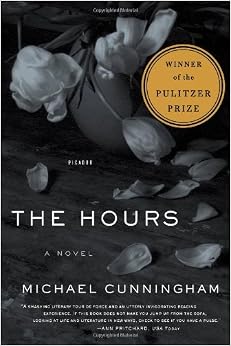
Image result for the hours novel

“We throw our parties; we abandon our families to live alone in Canada; we struggle to write books that do not change the world, despite our gifts and our unstinting efforts, our most extravagant hopes. We live our lives, do whatever we do, and then we sleep. It’s as simple and ordinary as that. A few jump out windows, or drown themselves, or take pills; more die by accident; and most of us are slowly devoured by some disease, or, if we’re very fortunate, by time itself. There’s just this for consolation: an hour here or there when our lives seem, against all odds and expectations, to burst open and give us everything we’ve ever imagined, though everyone but children (and perhaps even they) know these hours will inevitably be followed by others, far darker and more difficult. Still, we cherish the city, the morning; we hope, more than anything, for more. Heaven only knows why we love it so…”  

I’m reading Michael Cunningham‘s The Hours right now for my book club and absolutely love this quote. Winner of both the Pulitzer Prize for Fiction and the PEN/Faulkner Award for Fiction (along with a slew of other awards…gulp!), more people will probably be familiar with the movie of the same name, which starred three nobodies (Meryl Streep, Julianne Moore, Nicole Kidman) and a weak-to-quite-weak supporting cast (Ed Harris, John C. Reilly, Stephen Dillane, Jeff Daniels, Miranda Richardson, Allison Janney, Toni Collette and Claire Danes).

What I love about this Quote of the Day is that – aside from being bang-on – it’s depressingly uplifting; it’s both sad and encouraging somehow.  Agents, publishers and editors always stress that less is more, how the simple will always triumph over the convoluted. And guess what? Okay, okay, okay. I’ll give you three guesses, but the first two don’t count.

The answer is that they’re all correct.

While the strength of the passage obviously (obviously!) lies in the fact that Mr. Cunningham recognizes Canada as a superior country to the United States of Donnie T., it’s his simple prose tying so much of our greatest fears and hopes together that makes it sing off the page.

Good on Mikey C., eh? Maybe next time he be go and write good about ‘nother country fulla awesomeness, like that wicked hot place southa’ them there New Great Wall. That’d be somethin’, huh?

Leave a comment

Filed under Uncategorized

Monkey Hunting (novel)

Image result for monkey hunting

When you hear the words “monkey” and “hunting,” what comes to mind? Searching through forests, rifle in hand, as you keep an eye  out for primates swinging from tree to tree so that you can kill them with one decisive pull on the trigger of your 12-gauge pump shotgun, blowing said Curious George to smithereens?

No, no, no. Obviously you are not a monkey hunter. That is your bad.

In her 2003 novel Monkey Hunting, author Cristina Garcia tells the story of four generations of a Chinese family, the patriarch being Chen Pan, a 19th-century immigrant to Cuba. In case you didn’t know, Cuba had a sizeable ethnic Chinese population until Fidel Castro came to power in 1959 and said, “Thanks for your years of service (i.e. slavery), but your mother country is beckoning (i.e. get the hell out of our country, you dirty slaves).” Today, there are still remnants of a Chinatown in Havana, I’m told, minus the ethnic Chinese people themselves.

Although the novel starts on a page-turning note – we follow the struggle of Chinese immigrants to Cuba on their horrific journey across the world in much the same conditions as slaves brought to the Americas from Africa – the author soon loses the plot, literally and figuratively, and we start bouncing around the world at different periods in history, which in and of itself is always cool, but ends up being disjointed, fragmented and at times hard to follow in this particular case.

More specifically, the reader is not given the opportunity to form any real bond with the characters, as they fail to evoke even the slightest amount of empathy. The general rule to a decent novel is that it’s either highly plot-driven and the characters are one-dimensional (think Dan Brown or Lee Child, for example) or very much character-driven and the plot is almost secondary (think of Fear and Loathing in Las Vegas, Eleanor & Park or The Goldfinch). Rarely do the two combine to form a work of art (think of anything from Anna Karenina to Freedom).

Unfortunately, when you’re not invested in the characters and don’t really care what’s happening all around them, it’s a recipe for disaster. And this, sadly, is the case with Monkey Hunting. It’s an interesting premise with some well-researched information, but for that kind of story I generally turn to non-fiction. Or perhaps Time magazine, where – ironically enough – Ms. Garcia used to work.

Leave a comment

Filed under Uncategorized

Quote of the Day

Image result for bertrand russell

“For the love that has been purged by gentleness of all tendency towards tyranny can give a joy more exquisite, more tender, more capable of transmuting the base metal of daily life into the pure gold of mystic ecstasy, than any emotion that is possible to the man still fighting and struggling to maintain his ascendency in this slippery world.”

I love smart people. Deconstructing the sage words of people like Bertrand Russell (1872-1970) is like trying to put together a jigsaw puzzle – for a blind person.

Now, seriously, who doesn’t love a man with a pipe in his mouth and a tweed jacket to boot? The answer? Nobody. In fact, it’s hard to find stock images of  Bernie R. (no one actually called him that) without a good ol’ pipe dangling from those luscious and lascivious lips of his.

Born before the invention of the freaking electric light bulb, the automobile, the airplane, and, obviously, the iPhone, Russell would also outlive notable contemporaries like Winston Churchill, Adolf Hitler, FDR, Eleanor Roosevelt, Marie Curie, Ernest Hemingway, Mahatma Gandhi and Albert Einstein.

I like this Quote of the Day because, like Russell himself, it’s multilayered and multifaceted. Mathematician, philosopher, educator, writer, historian and political activist, B.R. was also a Nobel Laureate in his lifetime. Yep, just another trophy for the mantle.

With the above quote, you can see his mind at work on so many levels: as a poetic musing on love; as the opening of a treatise on overcoming political oppression; as a scientific analogy to everyday survival; and as a basic guideline to achieving happiness.

Oh, and in case you were wondering, today’s quote comes from Bertrand Russell’s 1930 book The Conquest of Happiness.

Leave a comment

Filed under Uncategorized

The Master and Margarita: The Movie

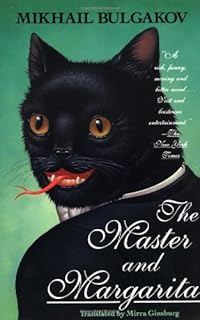
Image result for the master and margarita

The Master and Margarita may soon be coming to a theatre near you. This is exciting news. Not only is Bulgakov’s magnum opus one of the finest pieces of literature/satire from the 20th century, but it’s one of my all-time favourite novels. The former point is relevant; the latter is obviously really, really relevant.

Apparently, Svetlana Migunova-Dali and Grace Loh have optioned the rights to produce Mikhail Bulgakov’s classic 1966 novel about the devil (who doubles as a “professor” and a “magician”) in Stalin’s Soviet Union, a talking cat, Pontius Pilate and Jesus.

Actually, it’s a miracle we have this book with us today. Bulgakov started the novel in 1928, burned the first draft in 1930, and by the time he finished a complete draft in 1936, he knew the government would become the same devil in his own work if he tried to publish it. Then, in 1940, so very near the end of a final version, Bulgakov died. Like Vasily Grossman’s Life and Fate, which also has an epic story behind how the manuscript survived and was ultimately published, it would take decades for The Master and Margarita to reach an outside readership.

This truly is the most uplifting news out of the literary-film world in a long, long time. Is it just me, or do theatres here in North America seem to be dominated by one of three types of movies these days: (1) Sci-Fi/Space/Fantasy (2) Animation (3) Cheesy adaptations of fondue-laden books that are vapid in substance and put the “less” in plotless? (Think of anything from the Twilight series to 50 Shades of Yada Yada Yada.)

In relation to this grrrreat! news about Bulgakov’s baby, Emily Temple (@knownemily) has written a thought-provoking piece for Literary Hub (@lithub) called “Who Should Star in the New Movie Version of The Master and Margarita? It’s Not Easy to Find a Charasmatic Giant Talking Cat.” In Ms. Temple’s post, she has cast a wide net on notable actors, including Adrien Brody, Sacha Baron Cohen, Janelle Monae, Mark Strong and Tom Hardy.

For all our sakes, let’s hope this optioning of the film rights doesn’t end up on the cutting room floor and that we can look forward to a movie version that does justice  to this timeless novel.

Leave a comment

Filed under Uncategorized

Wattpad: Your Ticket to Literary Glory?

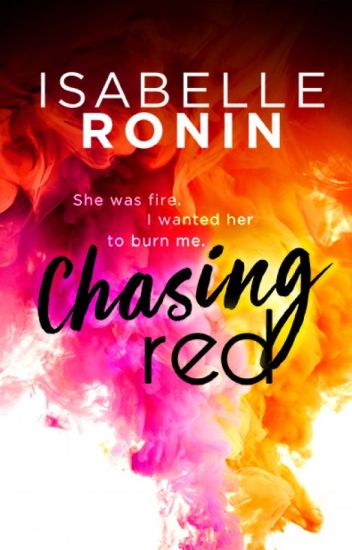
Image result for chasing red

In a CBC article titled “Winnipeg Wattpad writer receives book deal from U.S. publisher,” there is once again hope out there for all you writers who dream of making it big, but lack whatever the IT!/WOW! factor is it takes to get noticed by the Big Boys & Girls of publishing. Perhaps “A Novel Idea” has the answer.

Since ‘Pegger Isabelle Ronin (@isabelleronin) published her novel Chasing Red on Wattpad in 2016, she has received more than 126 million reads, making it the Toronto-based website’s most popular story of 2016.

That’s 126 followed by six zeroes. Or, put another way, that’s almost four times the population of Canada; 97 times the population of Manitoba; and 189 times the number of people who brave out every winter in the Chicago of the North. (ed. note: Does anyone actually say “Slurpee Capital of the World”?)

Obviously the short stories I, ah, have on Wattpad are similar to Ms. Ronin’s in that, you know, in that they all have words and, um, a cover design. Oh, we’re also both from Canada, which means our stories are probably really similar. Like, almost totally the same. Kind of same-same, but different?

Anyway, congratulations to Isabelle Ronin. Hearing stories like hers is a victory for literature, for writers, and – most importantly – for readers.

Leave a comment

Filed under Uncategorized

Quote of the Day

Image result for the end of history and the last man

“This then was the ultimate goal of totalitarianism: not simply to deprive the new Soviet man of his freedom, but to make him fear freedom in favor of security, and to affirm the goodness of his chains even in the absence of coercion.”

People like author Francis Fukuyama make my head hurt. Not in that John Cougar Mellencamp “make it hurt so good” kind of way; more in that “someone is using a jackhammer on my brain” sort of thing.

Fukuyama’s The End of History and the Last Man is one of the most engaging and informative non-fiction books I’ve read on political history. I’d sum up the book myself, but I’m feeling lazy, read the book years ago, and stumbled upon a review on goodreads.com that does a nice job of simplifying an otherwise big book.

Per the goodreads reviewer known only as Hadrian:

“[Fukuyama] does start off with the bold assertion that liberal-capitalist-democracy is the end point of history, but uses the rest of his chapters to back off from this assertion into a more tepid series of observations.

He does not support liberal-capitalist-democracy from a moral grounding, but instead notes its ability to survive and continue to reproduce itself after repeated economic crises, and its ability to outlast other alternatives from the far-right (fascism), and the far-left (communism). Its status as part of the end of history is taken from Hegel, interpreted by Kojeve and a bit of Kant. Fukuyama draws on these to say that the overall ‘meaning’ of history itself, or at least the general trend of it, leads to the continued spread of liberal-capitalist-democracy, and its perceived effectiveness in allowing the individual to act and express according to their own personal liberties in a universal, if homogeneous, state.

Despite this, it is still easy to pick apart his argument. The greatest possible drawback is that the historical conditions which led to the spread of liberal-capitalist-democracy might not necessarily continue into the 21st century and beyond. A chief example among these is the economic catastrophe of 2007, and how many have perceived this international system has being unable to meet the needs of its citizens.”

Now, if Mr. Fukuyama were to create some new idioms in the context of the current political climate in Washington, I imagine he might come up with one or more of the following zingers:

  • If it ain’t broke, don’t trump it.
  • You don’t be down with my there interpret of the constitutions, you be don with the wind.
  • My hair, my hair! My kingdom for my hair!
  • I vanka answer your question, dumbass, but I also vanka get me a piece of *$%&.
  • My mind thinks alike, small minds are for the (mostly immigrant) peons.
  • Be the change you will force on the world.
  • Money is the root of which all trees grow across America. Except in the blue states, where they grow on fake news, corruption, “facts,” liars, despicable people, evil lifestyles and rational intercourse (sic)

Leave a comment

Filed under Uncategorized

Rest in Peace, Stuart McLean (& Dave)

Image result for stuart mclean

Few radio personalities are rock stars like Stuart McLean (1948-2017) was for almost four decades. Although he was little known outside of Canada, he will remain a rock star in the eyes (and ears) of countless Canucks even though he is no longer with us. Why? Simply put, he was an ingenuous storyteller with a voice and flair like nobody else out there. This was most poignantly captured over the last 20 years through The Vinyl Café, arguably the best radio show we’ve heard in Canada in a generation.

I not only have fond memories of listening to him on CBC Radio 1 every Saturday morning, but had the pleasure of seeing him live in London, Ontario years ago. Mr. McLean was a one-man wrecking crew in the best possible way: he captured your attention immediately, held it with gravitas, then sucker-punched you with a quip or out-of-left-field one-liner that brought down the house.

The feckless yet impossible-not-to-love character of Dave, owner of the Vinyl Café record shop, will go down as one of the truly great radio characters in that medium’s history.

Click here to read about the extraordinary Stuart McLean, watch a video about his life, listen to a tribute in his honour, and relive some of his vintage stories.

1 Comment

Filed under Uncategorized

Quote of the Day

Image result for absolute mayhem, craziness

“[H]uman consciousness has been reduced to a panicked blur, a zoetrope of galloping despair.”

I love this line! I didn’t even know what on god’s green earth a “zoetrope” was before reading it this morning and I STILL loved it. Awesomeness as its most awesome.

This quote comes from an op-ed by Lindy West in The Guardian yesterday called “The first 25 days of Trump have been a zoetrope of galloping despair.” The preamble is as follows:

Today, during my morning routine of opening my laptop, clicking on literally anything, and just screaming and screaming, I made the astonishing discovery that Donald Trump has only been president of the United States for about three weeks. Which is weird, because I could have sworn we had fallen through a tesseract into the airless crush of a two-dimensional void at least seven eternities ago, or what would have constituted seven eternities if such a place had a linear concept of time. Turns out, though, it has only been 25 days, we are still on earth, and every cell in my body has not been excruciatingly flattened into pure math. It just feels like it.

It’s an understandable mistake, I think. Trump has really been eat-pray-loving his way through his first month as the most dangerous man on earth, seeding so many potential atrocities – including, perhaps, the breakdown of the republic itself – that human consciousness has been reduced to a panicked blur, a zoetrope of galloping despair. There are simply too many emergencies to hold all of them in your mind at once. Cecily Strong captured the feeling on this week’s Saturday Night Live: “Let me just say, you’re doing too much. I want one day without a CNN alert that scares the hell out of me.”

Spicy Spice might like using dolls to explain things to the media on a certain TV show, but with Donnie T. I think his pictures speak more words than any painter at anytime in history could ever evoke if not for the T.’s sage choice in art.

I’m not really sure what that means exactly, but here goes my poor attempt to capture the essence of it.

This is your brain.

Image result for the human brain

This is your brain in the Donnie T. era

Image result for chaos


Leave a comment

Filed under Uncategorized

Spicy Spice: The 6th Spice Girl

Image result for sean spice

(Siobhan Spicer shares a light moment with himself after mistakenly referring to the “Cold War” as the “Frigid Battle.”) 

Semantics matter. So do names. After referring to the Canadian prime minister, a man we Kanadians (oh, spelling matters, too!) call Justin Trudeau – or simply “The poster boy for the Hair Club for Men” – as Joe Trudeau, Siobhan Spicer has officially earned himself a place in the world’s most famous girly girl band.

Now known as Spicy Spice, or the 6th Spice Girl, S.S. (not to be confused with the Schutzstaffel…you can look that one up, Spicy Spice ) has not only become a household name in many countries around the world (e.g. Kanada, Mehiko, Ymn, Searia, etc.), but has also landed himself a place on SNL. Well, vicariously, at least.

See, the issue here is that the current White House keeps falling back on idioms like “The devil is in the details.” The problem is that there really is no catch or mysteriousness to the details that the Donnie T. administration keep screwing up. This is not a case of slippery semantics, wily words, complicated conundrums or any other alliterative term you can think of to defend these egregious errors. (Ooh ooh ooh! I just earned a Spicy Point for that one!)

Seriously, though, do we as a planet have to put up with this Banana Republic (No, not the clothing chain, Spicy Spice) for another three years, four months and eleven days? Don’t believe my math? There’s actually a UK site counting it down to the second.

Here’s another idiom: “The blind leading the blind.” That’s a good one because it dates back to the Upanishads, which…oh, forget it. Perhaps a good ol’ Dutch oven from that hilarious Hollander, Erasmus, will do the trick: “In the land of the blind, the one-eyed man is king.”

At this point, I think many of us who could not vote in the U.S. election but must endure its consequences would happily accept a thoughtful, well-spoken cyclops in the Oval Office than what we have now.

But if you want to brush up on your langwage skillz before yer next press briefing, Spicy Spice, I highly reco you reed this beaut of a short story, “Everybody’s Dictionary.”

Leave a comment

Filed under Uncategorized