Category Archives: Uncategorized

Where Abstract Art and Science Intersect

Image result for jackson pollock

In his piece entitled “This is your brain on art: A neuroscientist’s lessons on why abstract art makes our brains hurt so good,” Noah Charney writes for @Salon about a Nobel Prize-winning scientist specializing in human memory who is attempting to “break new ground in art history.”

Nobel Prize in Physiology/Medicine? Science? Art? This string of words is as titillating as it is tantalizing.

The Nobel Laureate Dr. Eric Kandel of Columbia University was initially interviewed by Mr. Charney in a piece called “On Memory, Klimt, Sex and Sea Snails.” Sounds sexy mild, right?

In the former article, Noah Charney postulates that the average person enjoys – and is less intimated by – traditional, naturalistic, formal art. It’s what Hitler called Hellenistic art. The German leader actually hated anything except this classical fine art medium so much that in 1937 he went so far as to hold what will probably go down in history as the biggest art sale ever, partly to raise money for his burgeoning army, but mostly to purge his borders of the “filth” that he believed painters like Picasso, Manet, Monet, Dalí , Miró, Gauguin, and van Gogh embodied. The führer lumped Impressionism, Surrealism, Expressionism, Cubism, and abstract art all into one category: scheisse (poo poo ca ca).

But I digress. As Mr. Charney argues, abstract art “poses such an enormous challenge to the beholder [because] it teaches us to look at art – and, in a sense, the world – in a new way. Abstract art dares our visual system to interpret an image that is fundamentally different from the kind of images our brain has evolved to reconstruct.”

Dr. Kandel backs this up with scientific data about the brain, discussing something every neuroscientist knows intimately: the difference between bottom-up and top-down thinking. The former refers to mental processes that are ingrained over centuries. In a nutshell, our safe zone from a cognitive point of view. The latter, on the other hand, refers to personal experience and knowledge.

Put in the context of art, “Top-down thinking is needed to interpret formal, symbol, or story-rich art. Abstraction taps bottom-up thinking, requiring little to know a priori knowledge.”

Personally, my favourite abstract painter is Wassily Kandinsky. As seen in this painting below, Sketch for Composition VII, 1913, Kandinsky does so much with what on the surface appears to be nothing but some random colours thrown together. But just as Dr. Kandel has shown through numerous brain experiments, a painting such as this bends and warps and pushes the mind to move in different directions and to essentially think outside the box.

As it were, Kandinsky was actually the inspiration behind my own short story, “Fervour of Spirit,” as well as the impetus behind a character in my second novel, The Immortal Flower.

Image result for kandinsky

Now, that’s not to say that I love all abstract art. I’ve been very fortunate to have visited some of the finest museums in the world, and every time I run across a Mark Rothko piece, like the one seen below, I scratch my head in wonder and say to myself, How on Earth is that meaningful or aesthetically appealing? Split the canvas in half and paint two colours? For true and for serious? It just looks like a bad European flag to me.

Image result for rothko

From a literary perspective, I highly recommend reading Lynn H. Nicholas’s The Rape of Europa if you’re interested in learning how modern art, especially abstract art, survived the Nazi purge of World War II, and how Peggy Guggenheim almost single-handedly saved Europe’s treasure trove of artistic treasures.

Leave a comment

Filed under Uncategorized

Quote of the Day

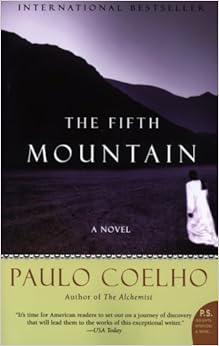
Image result for the fifth mountain

“At this moment, many people have stopped living. They do not become angry, nor cry out; they merely wait for time to pass. They did not accept the challenges of life, so life no longer challenges them.”

Although Brazilian author Paulo Coelho intrigued me with this breakout novel, The Alchemist, which in many ways is a modern-day The Little Prince, as I began to read more of Coelho’s works I quickly discovered that his formulaic, sometimes trite plotlines had begun to grow tiresome. His very left-leaning, staunch Catholic view of the world surfaced in ways that made his novels read more like platforms for personal rhetoric (and not unlike Trump’s use of Twitter) than creative fiction.

However, that’s not to say that Coelho can’t pen some snappy sentences from time to time. In fact, I think that’s his greatest gift as a writer; he is to memorably, thought-provoking short bursts of prose what Mad Men are to sound bites on Madison Avenue.

In any event, The Fifth Mountain was the fifth – and final – Coelho novel I read and will most likely ever read, but it did have the one passage quoted above that I felt, and still feel, is relevant to people’s lives today. While it’s true that we all face challenges in life, not all of us step up to confront them. Or, more to the point, we don’t challenge ourselves to become better human beings, to soar higher, faster, stronger. We merely let the sands of time wash over us in a desert of unfeeling numbness, head buried firmly underground, and waiting for this shitshow called life to be over.

Perhaps that sounds harsh, but I think Coelho would agree, and is part of the reason he’s been so successful. Like him or not, he’s taken life by the horns and run with the bulls all the way to the bank, selling more than 350 million books worldwide in more than 80 languages. Not bad for a law school dropout and self-described “hippie” who spent his early adult years traveling and not doing much of anything when it came to work.

Leave a comment

Filed under Uncategorized

Video of the Day (CFS/ME)

Image result for chronic fatigue syndrome

If you’re like me, you won’t have been familiar with the medical condition called myalgic encephalomyelitis (ME) until you watch this TED Talk I’m posting. Then again, perhaps you know ME by its everyday name, chronic fatigue syndrome (CFS).

Even if this condition doesn’t affect you, I urge you to watch the video and how Jennifer Blea weaves science, medicine, culture and history together to describe a horrific narrative about a condition that is not being addressed properly today.

All in all, it’s an unforgettable talk from an extraordinary woman. Click here to watch it on YouTube.


Leave a comment

Filed under Uncategorized

Quote of the Day

Image result for soseki natsume

“To objectively fabricate a purpose at the outset and to apply it to a human being was something that the individual who came into this world had to make for himself. But no one, no matter who, could freely create a purpose. This was because the purpose of one’s existence was as good as announced to the universe by the course of that existence itself.”

Back when my good friend Jason T. gave up on his dream of becoming a professional sumo wrestler in Nippon, and subsequently failed to be accepted into the yakuza community, he moved to Korea, where I was living at the time. We became fast friends and he soon introduced me to Japanese literature, which is to say pretty much every writer except the two Murakamis (Haruki and Ryu).

One of these novelists was Natsume Sōseki, considered by many to be the greatest Japanese writer in the modern era.  Sōseki wrote around the turn of the 20th century and had a profound impact not only on his peers and colleagues, but on generations of Japanese writers to come.

My first foray into Sōseki’s universe was through And Then. Per the book’s introduction:

“Daisuke, the protagonist, is a man in his twenties who is struggling with his personal purpose and identity as well as the changing social landscape of Meiji-era Japan. As Japan enters the 20th century, ancient customs give way to Western ideals, and Daisuke works to resolve his feelings of disconnection and abandonment during this time of change”

As seen from the Quote of the Day, however, there is also an existential element to the story about free will versus fate. While thinking of a friend recently who is struggling with her own significant life choice (is she indeed the master of her fate, the captain of her soul?), I came across this book I read many, many moons ago, a time, as they say, when tigers smoked.

For anyone looking to broaden their Japanese literature resume, I would highly encourage you to enter the world of Natsume Sōseki. Do not pass go and do not collect $200. Just read him!

Leave a comment

Filed under Uncategorized

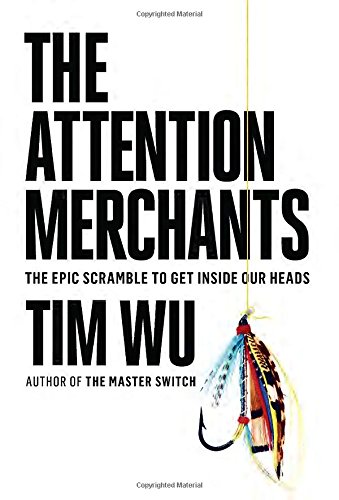
The Rise of Homo Distractus

about Image result for tim wu attention merchants

Columbia law professor Tim Wu (@superwuster), author of The Master Switch (2010), has a new book, The Attention Merchants: The Epic Scramble to Get Inside Our Heads.

A few months ago, I posted a piece called “Can You Concentrate Long Enough to Read This Title in Its Entirety Without Blinking or Looking Away?“, and while that details our shockingly short and stupendously sad attention span, Mr. Wu’s latest literary offering puts his crosshairs squarely on advertising.

Mr. Wu, who coined the term “net neutrality” (the principle that Internet service providers should enable access to all content and applications regardless of the source, and without favoring or blocking particular products or websites), writes extensively about how advertisers have shifted from traditional Madison Avenue-style advertising (think Mad Men) and have now zeroed in on the Internet.

But even as software program and computer companies try to defend against this, “attention merchants are always growing new heads, even as their means of getting inside our heads are changing our very nature–cognitive, social, political and otherwise–in ways unimaginable even a generation ago.”

A couple of choice quotes from Mr. Wu include the following:

“Attention, after all, is ultimately a zerosum game.”

And my favourite:

“…homo distractus, a species of ever-shorter attention span known for compulsively checking his devices.”

I think I have to get my hands on this book. After turning off all my electronic devices, that is.

Leave a comment

Filed under Uncategorized

The Joys (Horrors) of Freelancing

Image result for frustrated worker

@Jonwestenberg (jon@creatomic.co) has posted a great piece on freelancing that so very much tickled my fancy. Very subtly titled “Fuck you. Pay me.” Mr. Westenberg discusses one of the mot annoying parts about going it all alone as a freelancer or as a small business owner: clients expecting you to do work for them pro bono. I would take that one step further. As someone who’s been freelancing professionally for well over a decade, my biggest concern is not so much that the client won’t pay me, but when they will pay me. Landlords, banks, companies and the like don’t take very kindly to “So sorry, but my clients are total douchebags and didn’t pay me when promised. I’ll just, you know, pay you next month – or perhaps the month after that – when these arseholes finally cough up my doughy dough.”

After Mr. Westenberg details the guilt attached to this constant hounding from clients (“Can’t you do this for me just one time?” “It would really mean a lot if you could do this for me…pretty please with cherries on top?” “We don’t have the money to pay you for this. I’m so, soooooo sorry.”), he describes how to assuage any guilt you, the freelancer and the one actually doing the work, might feel in these situations and in fact breaks it down temporally by the number of hours the average person lives (in his home of Australia, which apparently is 82 years).

Freelancers of the world unite!

Leave a comment

Filed under Uncategorized

Quote of the Day

Image result for a gesture life

“And the idea entreats me once more, to wonder if something like love is forever victorious, truly conquering all, or if there are those who, like me, remain somehow whole and sovereign, still love unvanquished.”

Today’s Quote of the Day comes from my favourite Chang-rae Lee novel, A Gesture Life. Although best known for his debut novel, Native Speaker (winner of the PEN/Hemingway Foundation Award and the American Book Award), A Gesture Life is a beautiful work of fiction that mixes lyrical, song-like prose with the hardship of reflecting back on a life that is wrought with tragedy and fatal mistakes.

The story switches back and forth between  the past and present and does so to overwhelming success. The protagonist, a Korean-born Japanese man named Doc Hata, eventually settles in New England later in life, but he has a dark secret that involves something very few Europeans and North Americans know much about: World War II comfort women. The majority of these women were Korean, though there were also Chinese, Taiwanese and even Dutch nationals (living in Indonesia) who were essentially sex slaves used by the Imperial Japanese Army in their march across Asia. They typically lived “in harsh conditions, where they were subjected to continual rapes and were beaten or murdered if they resisted.”

In A Gesture Life, the reader is transported to Burma (or Myanmar as it’s now known) near the end of the war through Doc Hata and the writing pops off the page with its authenticity and pathos. Yet it’s the slow revelations much later in Doc Hata’s life that lends the book a quiet mysteriousness that for me still resonates to this day.

If you’ve never read anything before by the Stanford creative writing professor, I strongly encourage you to start with this novel. You won’t regret it.

Leave a comment

Filed under Uncategorized

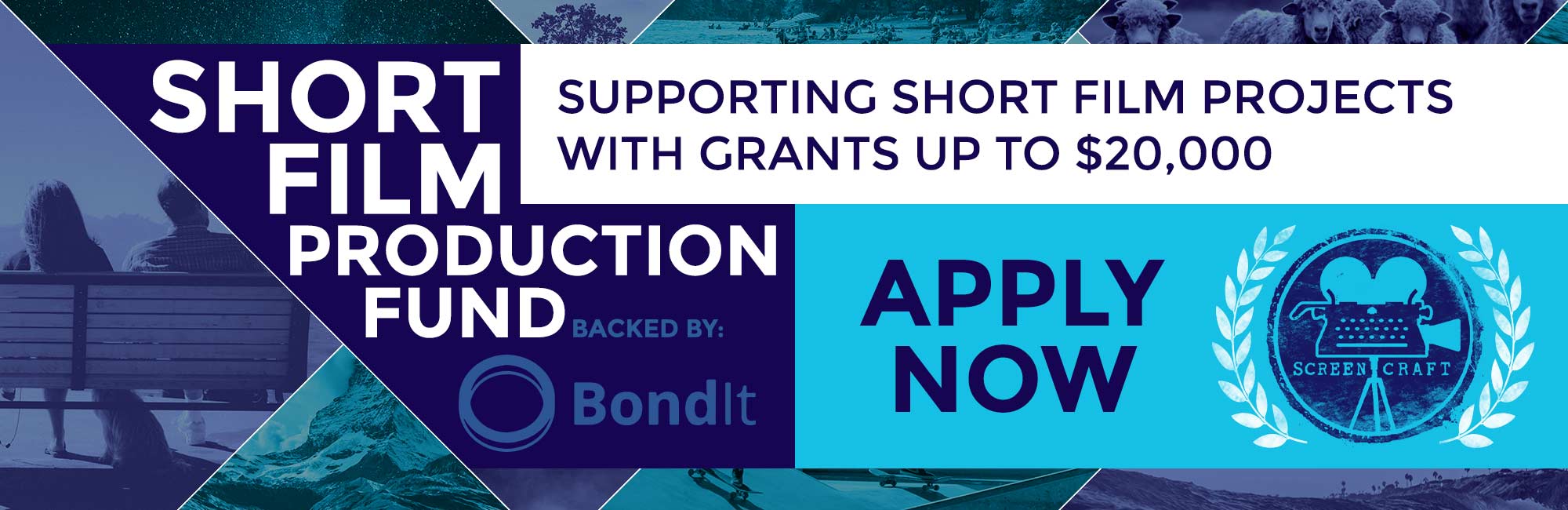
Short Film Project Grants

Image result for short film production fund

Have an idea for a short film? Already have the screenplay written? Then maybe you should head over to @screencrafting (screencraft.org) and get yourself a grant for up to 20K. And that ain’t Monopoly money, yo. It be the real green Donnie T. uses to wipe the sweat off his forehead when he’s about to make another excellent, balanced and well-thought-out decision in the Orange House.

Click here to learn more, filmmakers.


Leave a comment

Filed under Uncategorized

Quote of the Day

Image result for cloud atlas novel

“It’s true, reading too many novels makes you go blind.”

Well, that explains why I wear bifocals that resemble the Hubble Space Telescope. Problem solved!

This quote comes from the insanely mind-bending novel Cloud Atlas, which many literati consider David Mitchell’s opus – for now. A brilliant multi-century set of six recurring stories that take place around the world, Cloud Atlas is without question a tour de force.

Although you might initially laugh at the sentence (how can anyone read too many novels?), I think there’s more truth to it than you might have considered. Authors like Dan Brown dance around the subject of pursuing the facts (or the truth) at the potential cost of death in a FUN! way, but I think someone like Umberto Eco does a better job of capturing the lesson here. The Name of the Rose is a phenomenal story about the thirst for knowledge and the danger this can entail. Now, you might think that learning, reading and bettering yourself mentally have no limits, but I think that’s what Cloud Atlas and Eco’s opus teach us – even with the great achievements in life, sometimes you can go too far and there are necessary consequences to these pursuits.

On a personal note, I had the extreme good fortune to get to know David Mitchell before his meteoric rise to worldwide fame. I even spent time with he and his family in Ireland before Cloud Atlas turned DM into a literary rock star and the Wachowskis picked up the rights to turn the novel into a major Hollywood film (though it pales in comparison to the book sadly). I’ve also had the good fortune to meet many other authors over the years and can say unequivocally that David is not the only the most gracious of writers I’ve gotten to know, but has a mind and a sense of creativity unlike anyone else I know of writing today.

So, if you haven’t read Cloud Atlas yet, do yourself a favour and go get it. Once you’re done that, you can start from the beginning of his oeuvre and pick up Ghostwritten, another kick-ass novel that will make your head spin with its originality.

Leave a comment

Filed under Uncategorized

The Ties That Bind: Video of the Day

Image result for denmark

A new segment! Yippee! As an erudite, open-minded, humble, kindly kind person, I love sharing nice things with nicely people, so I figured if I have a Quote of the Day, I might as well have a Video of the Day from time to time.

My good friend Tyler L., a top film producer who got his start as a key grip in Smoke Yourself Thin and You Ain’t on the Moon Yet, Timmy! can attest to, Denmark is da bomb. Well, those wily Danes have done it again, it seems. This commercial produced by a Danish TV network is not so much a tearjerker as it is a wakeup call for humanity. I can’t think of a period in my lifetime when divisiveness ruled the day as much as it does at present.

So for all you sentimentalists out there, Joel H., pull out a box of tissues, sit back, and watch something that will not only make you proud to be alive, but perhaps even entice you to travel to the land famous for the Little Mermaid, Hans Christian Andersen, and overpriced coffee.

Click here to watch the commercial.

2 Comments

Filed under Uncategorized