Quote of the Day

I loved you; and perhaps I love you still,
The flame, perhaps, is not extinguished; yet
It burns so quietly within my soul,
No longer should you feel distressed by it.

Silently and hopelessly I loved you,
At times too jealous and at times too shy.
God grant you find another who will love you
As tenderly and truthfully as I.
— Alexander Pushkin, “I Loved You”


Although most readers are familiar with the Russian Literary Triumvirate that is Anton Chekhov, Leo Tolstoy and Fyodor Dostoyevsky, in many ways Pushkin is seen as the mack daddy of Russian literature. No small feat, indeed.

Today, he is probably most famous for the novel Eugene Onegin, but Pushkin – aside from being considered the father of his nation’s canon of modern literature – is better known inside the frozen borders of that limitless country as its greatest poet. The poem I chose today for the QOTD is one example of his brilliance, though you’ll see countless translations of the same poem all over the interweb.

Per the Wiki entry on this:

“I Loved You” is a poem by Pushkin written in 1829 and published in 1830. It has been described as “the quintessential statement of the theme of lost love” in Russian poetry, and an example of Pushkin’s respectful attitude towards women.

4 Comments

Filed under Uncategorized

Editing/Publishing Jobs


Looking for work in the laissez-faire, overpaid field of publishing? Look no further!

Click here to go to Quill and Quire‘s job board and see openings for seven new positions in this stress-free, low-key industry.

And for a rare look into the world of publishing from a fiction POV, check out my short story, “A Novel Idea.”

Leave a comment

Filed under Uncategorized

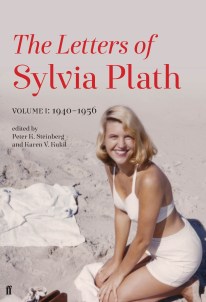
The Letters of Sylvia Plath


And still she speaks to us.

Her editors in New York knew exactly what they were doing with this book design. Just as the Instagram campaign highlighted recently, what you see on the outside is rarely what’s happening on the inside. Look at this beautiful blonde woman, the cover beckons us. Striking debutante? Swimsuit model? New wife and mother who has already “recovered” to her perfect form?

Nope. That’s the face of someone who put her head in an oven while her kids were in their bedrooms and killed herself from carbon monoxide poisoning.

More than 50 years after her death, Parul Sehgal (@parul_sehgal) reviews what may the most intimate look at the famed poet and writer in “Sylvia Plath’s Letters Reveal a Writer Split in Two.”

The title of the tome (1,388 pages), edited by Peter K. Steinberg and Karen V. Kukil, is The Letters of Sylvia Plath Volume 1: 1940-1956, so you can expect a second volume soon, I imagine.

While works like The Bell Jar are seen as semi-autobiographical, and her poetry now described as “confessional,” there’s no doubt that in these letters Plathophiles will see a side to a woman who has come to represent all that was wrong with mental health diagnosis in the past, especially when it came to depression.

In light of #WorldMentalHealthDay yesterday – and with Plath’s legacy still as strong as ever – hopefully these letters will illuminate parts to her past that have remained hidden up until now, shedding new light on awareness about mental health.

Leave a comment

Filed under Uncategorized

Little Fires Everywhere


“Sometimes, just when you think everything’s gone, you find a way…Like after a prairie fire. I saw one, years ago, when we were in Nebraska. It seems like the end of the world. The earth is all scorched and black and everything green is gone. But after the burning, the soil is richer, and new things can grow…People are like that, too, you know. They start over. They find a way.”

— Celeste Ng, Little Fires Everywhere

On the heels of her hugely successful debut novel, Everything I Never Told You, the second literary effort from Celeste Ng (@pronounced_ing) is called Little Fires Everywhere, but could very well be titled “A Heartbreaking Work of Staggering Genius” (if not for Mr. Eggers) or simply “Trainwreck Central” (if only that title wouldn’t cause so much confusion among train enthusiasts). Call it beautiful, astounding, revelatory, captivating – just don’t call it late for the fireworks. And that’s because there are plenty of them in this rich tapestry of voices and shared histories.

Through Little Fires Everywhere, we are witness to an author who, with a practiced deftness beyond her years, delves into the intimate pasts of so many men and women, boys and girls, to bring about a cavalcade of experiences that are somehow, in some way far past the reader’s imagination, connected.

This novel reminded me so much of Jonathan Franzen’s Freedom in all of the good ways – excellent character development, an intriguing plot, a window into the human condition – but with a tighter ending than what some would call Mr. Franzen’s opus.

Now this is ironic, for me at least, because of who Ms. Ng’s publisher has chosen to be the frontline supporter for Little Fires Everywhere: Jodi Picoult. There’s Ms. Picoult’s name splashed across all editions of the novel! And why not? Jodi Picoult is the bestselling author of something like 254 novels on…you guessed it! The New York Times bestseller list.

But within the publishing world, she’s also known as one of two women, along with fellow bestselling author Jennifer Weiner, who stood up to the alleged “literary establishment’s shoddy treatment of commercial writers” in the wake of “Freedomgate.” Jason Pinter wrote an article about this, “Jodi Picoult and Jennifer Weiner Speak Out on Franzen Feud,” in which he interviewed both women.

Apparently, Ms. Picoult and Ms. Weiner got caught in the crossfire after Franzen published Freedom, landed himself on the cover of Time magazine, and had the Times drooling all over him and everything Midwest or Minnesotan.

Ms. Weiner summed up her point quite nicely by stating in the above interview:

“I think it’s a very old and deep-seated double standard that holds that when a man writes about family and feelings, it’s literature with a capital L, but when a woman considers the same topics, it’s romance, or a beach book – in short, it’s something unworthy of a serious critic’s attention.”

I won’t concern myself with this curfuffle/kerfuffle – or whatever it is – but I will say that Little Fires Everywhere is most definitely Literature, prose fiction, or whatever the France label you want to put on it to make it sound more part of la noblesse or the literati.

Leave a comment

Filed under Uncategorized

World Mental Health Day


In honour of World Mental Health Day (#WorldMentalHealthDay), what better way to further the initiative than to talk about a subject which is still shunned by much of society. There is no shame in discussing this issue, save the wall of fear we ourselves erect.

And that’s because we are all damaged goods. The difference with many of us is the wrapping paper we put on the outside to make things look pretty. And acceptable. And safe. But underneath the shiny, bleached pulp, we all struggle. We try and make sense of the world. Sometimes we make brave advancements, and other times we cower in fear, unable to face the deafening light of reality.

Deep down, in that cave we don’t let a soul, yet which houses our very own, we spend much of our time when alone. We don’t allow others in lest they scar its pristine walls with their breath, or damage its floor with their stomping.

I can think of two words in English that embody this day very well. Not perfectly, of course, as language is a human invention, and therefore necessarily flawed, but I think compassion and empathy do a pretty good job nonetheless. (In the past, people also used compassionate as a verb. I like that, and would like to resurrect its usage.)

In my experience, compassion is gained by a wealth of human interactions, while reading a wide variety of books inculcates empathy, even in the mean-spirited.

I was watching a TED Talk recently and Joan Halifax Buddhist teacher, Zen priest, anthropologist, and pioneer in the field of end-of-life care — was describing what compassion means to her. You can click on the link above and watch all 12 minutes, but essentially what she said was: “Compassion is comprised of that capacity to see clearly into the nature of suffering…and to see that I am not separate from this suffering.”

If you find yourself struggling on this day, and perhaps on many others, don’t let the fear of your ego being tarnished hold you back from discussing it. If you can’t/won’t talk to friends, loved ones and/or family, there are other outlets. Although not everybody reading this right now will reside in Canada, we are very fortunate to have countless organizations, help lines, institutes, hospitals and peer groups that can help you with this throughout the country.

One of the finest examples of this is the Centre for Addiction and Mental Health (CAMH) here in Toronto. Like any other big organization, it can seem daunting at first to navigate your way through its murky waters, but I assure you the effort is well worth it. Many kind and well-trained people work there and want exactly what you do: to find solutions to tough problems that may feel like they are strangling you from the inside out.

For now, I’ll leave you with this poem and some more information at the bottom. In closing, 안녕히  계세요 (Stay in peace)…


My Urn


To the urn of which I hallow,

a stark reminder of things past,

I was once a deathly sallow,

but hoped it would not last.


Now, in years since passed,

life did somehow turn,

From burning coals and rotten ashes,

to a higher place I’m free to yearn.


P.S. Per the World Health Organization, the good people who bring you this day, and their website:

World Mental Health Day is observed on 10 October every year, with the overall objective of raising awareness of mental health issues around the world and mobilizing efforts in support of mental health.

The Day provides an opportunity for all stakeholders working on mental health issues to talk about their work, and what more needs to be done to make mental health care a reality for people worldwide.

2 Comments

Filed under Uncategorized

The Thirteenth Month Fund


I have a new BFF. Her name is not Siri, Alexa or Cortana. No, no. Her name is Rachel Schneider (@RachelSchneider) and she is the co-author of The Financial Diaries: How Americans Cope in a World of Uncertainty, as well as SVP at the Center for Financial Services Innovation.

Writing for the Economic Security Project, Ms. Schneider penned an article titled “The Thirteenth Month Fund” that has me nodding up and down more times than Carter has pills (to quote my father).

With economic disparity growing more severe with each passing year, it’s high time we bring about change in a broader range. Please excuse my poor-to-quite-poor attempt at economic poetry. Pun intended.

Seriously, this Thirteenth Month Fund is a great idea, especially for low-income families with children (remember last week that to THRIVE! in Toronto you need a mere annual income of about $48,000).

Ms. Schneider starts by asking a very basic question: “What if everyone in the country had access to emergency funds when they need them most?”

In case anyone in Ottawa is reading this today, Ms. Schneider sums up her message pretty well here:

“The mental toll of not having a cushion of any kind is real. Increased stress leads to poor physical health and worse outcomes for children, potentially including long-lasting, negative impacts on brain development. Financial shocks often measure in the hundreds of dollars, yet they can derail financially fragile households, draining savings and increasing debt.”

Leave a comment

Filed under Uncategorized

LinkedOut?

Image result for phishing

I’m very fond of all the people out there who have nothing better to do than go on phishing expeditions and screw up my life online.

In an article titled “LinkedIn requests from strangers can land you in hot water,” we peons of the Information Superhighway have yet another “friendly” site to be wary of. Fantastic.

I think the following quote sums it up best, mostly because Ms. Wikoff uses the word nefarious. That’s my Word of the Day. (Ex. Curlers and book club members are a nefarious lot because they spend too much time sending their rocks down slick surfaces whilst reading epics like Robert Rankin’s Nostradamus Ate My Hamster.)

“It’s got trust built into it, and hackers leverage that trust to their own nefarious purposes.”

— Allison Wikoff, Senior Researcher, SecureWorks

Leave a comment

Filed under Uncategorized

Yay! Back to Work!


For those of us in The Great White North, we are back to work today after a three-day long weekend for Thanksgiving. In my alma mater, South Korea, they’re back to work after nine days off for their Thanksgiving. Looks like I chose poorly when it comes to Thanksgiving countries.

On this momentous occasion of returning to work, I thought I’d infuse some pep, maybe a little je ne sais quoi (ooh la la, say the ladies out there), into your morning. So instead of some stuffy Quote of the Day from a stupid book about stupid people who aren’t REAL! and don’t know what REAL LIFE! is like, I’ll refer to some people who may or may not have been in your kitchen…

“Opportunity does not knock, it presents itself when you beat down the door.” – Kyle Chandler

“The only place success comes before work is in the dictionary.” – Vince Lombardi

“You can’t use up creativity. The more you use, the more you have.” – Maya Angelou

“Problems are not stop signs, they are guidelines.” – Robert H. Schuller

“Build your own dreams, or someone else will hire you to build theirs.” – Farrah Gray

“Everything you’ve ever wanted is on the other side of fear.” – George Addair


Leave a comment

Filed under Uncategorized

Quote of the Day


“Do not spoil what you have by desiring what you have not; remember that what you now have was once among the things you only hoped for.”

Epicurus

What was it about those Greeks that made them so smart? Must have been all the Greek salads. (Groan.) Alls I know is that most of what them there dudes said is still Greek to me. (Ooooh…presently suffering from groin injury due to excessive groaning.)

In light of this, our season of giving thanks, I’ll dedicate today and tomorrow to this sense of gratitude we should all be more aware of on a daily basis. In line with this, I’m also linking one of my favourite YouTube videos, which basically echoes this theme, called “Meaning Of Life Animated.”

For those not familiar with the famed autodidact mentioned above, here’s a brief summary of Epicurus per his Wiki entry:

Epicurus (Greek: Ἐπίκουρος, Epikouros, “upon youth”; Samos, 341 BCE – Athens, 270 BCE; 72 years) was an ancient Greek philosopher and the founder of the school of philosophy called Epicureanism. Only a few fragments and letters remain of Epicurus’s 300 written works. Much of what is known about Epicurean philosophy derives from later followers and commentators.

For Epicurus, the purpose of philosophy was to attain the happy, tranquil life, characterized by aponia, the absence of pain and fear, and by living a self-sufficient life surrounded by friends. He taught that pleasure and pain are the measures of what is good and bad, that death is the end of the body and the soul and should therefore not be feared, that the gods do not reward or punish humans, that the universe is infinite and eternal, and that events in the world are ultimately based on the motions and interactions of atoms moving in empty space.

Leave a comment

Filed under Uncategorized

You Are What You Read


This is your brain on books. Most of the time.

In a piece titled “Tell Me What You Read, And I’ll Tell You Who You Are.” Zat Rana (@Zat_Rana) explains how the books we read shape our thoughts. As he puts it:

You are what you read. The information that you input into your mind informs your thinking patterns, and it influences your output in the form of the decisions you make, the work you produce, and the interactions you have.

This is of course not a news flash — to most of us. But Mr. Rana is specifically concerned with our reading habits and what it is we’re taking in on a daily basis. Consider the following:

In the last 10 years, the number of books published per year has doubled.

10 times more data will be produced in 2020 than was produced in 2013.

We live in age of information overload, and the ability to distinguish value from noise is going to become an increasingly critical quality.

The effects of reading aren’t always obvious, and as a result, many of us don’t always pay attention to what our brain is processing, and we just go along in whatever distraction the world guides us. That’s not the way ahead.

I’ve espoused the utility — and joy! — of reading recreationally more times than I can remember, but as Zat Rana concludes in a succinct manner:

At the end of the day, one of [the] most important skills in your life is how you think. It affects everything from what you produce to how you see the world. It’s on you to improve that by consuming input of value.

View at Medium.com

Leave a comment

Filed under Uncategorized