Category Archives: Uncategorized

Quote of the Day

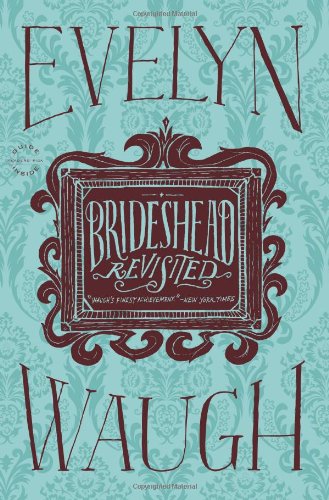
Image result for brideshead revisited

“I should like to bury something precious in every place where I’ve been happy and then, when I’m old and ugly and miserable, I could come back and dig it up and remember.”

Evelyn Waugh, Brideshead Revisited

For anyone who has even a little bit of love-on for the England of yore, this book is for you. Evelyn Waugh, most recently mentioned in Sofia Coppola’s Oscar-winning Lost in Translation, was a prolific journalist, biographer, travel writer and critic during his lifetime, but is today probably best remembered for his classic 1945 novel Brideshead Revisited.

There are numerous versions of this book that have been adapted to the silver screen and turned into TV miniseries, but if you find yourself in the mood for an oldie but a literary goodie, you won’t be disappointed  with this book.

Leave a comment

Filed under Uncategorized

The Inconvenient Indian/Quote of the Day

The Inconvenient Indian: A Curious Account of Native People in North America

“You know what they say. If at first you don’t succeed, try the same thing again. Sometimes the effort is called persistence and is the mark of a strong will. Sometimes it’s called perseveration and is a sign of immaturity. For an individual, one of the definitions of insanity is doing the same thing over and over again in the same way and expecting different results. For a government, such behavior is called… policy.”  

Thomas King, The Inconvenient Indian: A Curious Account of Native People in North America

I can’t think of a better title or a better quote than the above, which comes from Thomas King‘s 2012 prize-winning book. Probably best known for The Inconvenient Indian and Green Grass, Running Water, Mr. King currently teaches at the University of Guelph and has, over the years, become one of our country’s leading writers about Canada’s Native people.

However, the impetus for choosing today’s Quote of the Day comes not as much from the book as it does from an article that the Toronto Star fronted with on March 4, 2017, “Families divided after Ottawa tells thousands they’re not indigenous.”

Why this article and why now?

Because now it’s personal. For reasons that escape me, Indigenous and Northern Affairs Canada issued a letter on January 31, 2017 to about 83,000 people claiming Mi’kmaq ancestry (of a grand total amounting to about 101,000 people) saying that they were being denied membership on the Qalipu Mi’kmaq First Nation registry based on a point system that some have called flat-out “idiotic.”

For the record, I have seen this letter myself, and the point system to determine someone’s “genuine” band status is nothing short of a cruel joke. More to the point (legally, that is), Canada’s Indian Act does not have a point system to determine how “Indian” someone is; that, yet again for reasons that allude me, is unique only to the Qalipu of Newfoundland.

So, in May 2018, four of my family/extended family members will have their Native status withdrawn from the official Qalipu registry when it’s made public “once and for all.”

Well, isn’t that convenient.

In one fell swoop, the federal government has done away with 83% of an entire band’s membership (saving Ottawa a ton of money in benefits and related costs), which – I might point out – is the only recognized Native band on the island of Newfoundland.

Carolyn Bennett, Canada’s Minister of Indigenous and Northern Affairs, may not have been in charge in 2008 when this debacle began unfolding, but she is now and doesn’t seem to be in any rush to slow this train down as it approaches Trainwreck Central.

Today, filmmaker Michelle Latimer, a senior programmer at Toronto’s ImagineNATIVE Film & Media Arts Festival, is in development on a project through the National Film Board tentatively titled The Inconvenient Indian (based on Thomas King’s book). Plus, one of my old classmates, Jesse Wente (@jessewente), Director of Film Programmes at TIFF Bell Lightbox and columnist for “Metro Morning” on CBC Radio One,  will be serving as one of the project’s producers. Hopefully it, like the book, will help shed more light on a subject that is still far too often dismissed, ignored or – as is the case with the 83,000 former Qalipu Mi’kmaq First Nation band members – blatantly shunned.

Leave a comment

Filed under Uncategorized

North Korea’s First Novel

Is fiction from North Korea…fictitious? Apparently not. Shhhhhhhh…don’t tell Sir Lord Viceroy Douchebag Kim Jong-un that his grandfather, Kim Il-sung, and his glorious revolution may not be portrayed all that, um, you know, gloriously? Viva la revolución! Er…만세!!!

Good on Toronto’s @HouseofAnansi publishing house for securing the Canadian rights to “The first piece of fiction to come out of North Korea.” The book, called The Accusation, was written by a North Korean under the pseudonym Bandi (Korean for “firefly”) and released yesterday, March 4, in Canada. Perhaps the most frightening part of whole story is that Bandi reportedly still lives in North Korea. Gulp.

Per House of Anansi’s website, here’s a summary of Bandi and his/her novel:

In 1989, a North Korean dissident writer, known to us only by the pseudonym Bandi, began to write a series of stories about life under Kim Il-sung’s totalitarian regime. Smuggled out of North Korea and set for publication around the world in 2017, The Accusation provides a unique and shocking window into this most secretive of countries.

Bandi’s profound, deeply moving, vividly characterized stories tell of ordinary men and women facing the terrible absurdity of daily life in North Korea: a factory supervisor caught between loyalty to an old friend and loyalty to the Party; a woman struggling to feed her husband through the great famine; the staunch Party man whose actor son reveals to him the theatre that is their reality; the mother raising her child in a world where the all-pervasive propaganda is the very stuff of childhood nightmare.

The Accusation is a heartbreaking portrayal of the realities of life in North Korea. It is also a reminder that humanity can sustain hope even in the most desperate of circumstances — and that the courage of free thought has a power far beyond those who seek to suppress it.

FYI, there is both a print version ($19.95) and a digital version ($16.95) available through House of Anansi’s website. Also FYI, the translator of The Accusation is none other than Deborah Smith, the same British woman who translated Han Kang‘s Man Booker International Prize-winning novel, The Vegetarian.

Leave a comment

Filed under Uncategorized

New OAC Grant Guidelines/Deadlines

Image result for ontario arts council

FYI, the Ontario Arts Council (OAC) has new guidelines/deadlines for writers seeking grants and funding for projects as of right now.

Check out their link here to learn more.

Leave a comment

Filed under Uncategorized

The Ghosts of Books Past

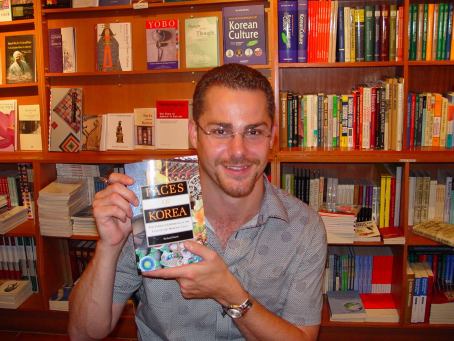
faces_of_korea_pic

What stately, chiseled milksop hath graced the top of this post! Out, damn’d spot!

Many thanks to my old friend Joe Chung who just sent me this photo from my book launch for Faces of Korea at Seoul Selection bookstore all the way back in 2004. Owner Hank Kim was very kind to open the place up to my Mötley Crüe of Die Hard followers (i.e. my brother, his best friends Young-bum and Bum-suck, Bruce “Wha’chu talkin’ ’bout” Willis, Vince Neil and Tommy Lee).

While I clearly haven’t aged since then, I still can’t believe I was a mere 21 years old at the time! What splendorous days of yore, when frolicking in the meadows was still an admirable (and exciting!) activity to take part in on weekends.

Leave a comment

Filed under Uncategorized

Short Prose and Poetry Competition for Emerging Writers

Image result for Short Prose and Poetry Competition for Emerging Writers

The Toronto Arts Council (@TorontoArts), in conjunction with the  Ontario Book Publishers Organization, is holding a short prose and poetry competition for emerging writers.

To qualify, you must be 16 years of age or older, a resident of Toronto and have no book publishing credits. And the best part is that there are cash prizes of $1000 for each of the four winners.

Entries must be received electronically by May 1, 2017 at 11:59 pm Eastern Standard Time to jury@obpo.ca

Leave a comment

Filed under Uncategorized

(Partial) World Book Day

Image result for world book day

Q. Why “partial” World Book Day?

A. Because it’s only World Book Day in the UK and Ireland today, March 2, 2017.

Oh, right! I forgot that there’s the “world,” and then there’s a couple of islands in the North Atlantic. Thanks for clearing that one up, WBD!

Nonetheless and nevertheless, any excuse to read or talk about books is all goodly in my books. (Ha ha ha. Get it? Good in my…hmm…)

World Book Day comes with resolutions, right? Excellent. In that case, here’s my WBD Resolution: Let’s get more men reading.

eHarmony? Match.com? AshleyPleaseDoNotHackMyComputerMadison? No wayz. You be readin’? You be sexy. You be up down in that action? You be gettin’ hit on harder than a piñata at a birthday party for sugar-starved kidz.

Menfolk of the world, if you want to amp up your A game one more notch, here’s a piece of goodly advice: start a book club. Not only is it a swank excuse to meet hot dudes and dudettes, but you’ll expand that one muscle you can’t get to at the gym.

So ask yourself, what should you be reading right now that doesn’t include (a) anything about Donnie T.; (b) anything lewd, lascivious or luciously lucious; (c) anything related to your job/kids; or (d) anything that rhymes with “fetish”?

Me, I’m reading Michael Cunningham’s The Hours in honour of CAMH’s One Brave Night initiative for mental health.

Oh, and if you’re wondering when the (other part of the rest of the) World Book Day falls, it’s Sunday, April 23, 2017. For international information on World Book Day, you can visit www.unesco.org

Leave a comment

Filed under Uncategorized

The Big, Busy Brains of Bilinguals

Image result for languages and the brain

In a post titled “Being bilingual alters your brain. Here’s how,” Quartz editorial fellow Frida Garza (@fffffrida) explains how the brain changes on a neurological level when you are able to speak two languages, or as she puts it: “[M]astering two languages can fundamentally alter the structure of your brain, rewiring it to work differently than the brains of those who only speak one language.”

I think it goes without saying that learning a foreign language, if not for professional purposes then for self-improvement reasons, is a good thing. I suppose the same could be said of learning anything in a more general sense, but in my opinion language acquisition strengthens one of mankind’s most important intangible traits: empathy.

Scientists, sociologists, readers and writers have long claimed that the distinguishing factor with reading fiction, for example, is that it increases one’s empathy to the world around them. I guess it comes as no surprise, then, that women make up the majority of fiction readers.

However, this also raises another question that’s long bothered me: Why are non-Quebecer Canadians so quick to drop French at school once they hit grade 10 (the earliest they can do so)? And why do non-immigrants/children of immigrants in the U.S. and Britain rarely speak a foreign language? We have the financial and educational resources, so there’s obviously something else at play. There must be, right?

Consider this: Two-thirds of working-age Europeans know a foreign language, with Luxembourg (the little engine that could!) driving this train forward with a bilingual rate of 99%. Of course, when one of your official languages is Luxembourgish it’s sexyish to be a cunning linguist.

Plus, guess who’s pulling their weight right behind mighty Luxembourg (whose national motto, by the way, is “We want to remain what we are”)? It’s Lithuania and Latvia, coming in at bilingual rates of 97% and 95%, respectively. Alternatively, Italy, France, Belgium and Spain all fall below the EU average in this regard, yet they’re among the wealthiest, most highly educated countries in the European Union.

The kind, kangaroo-loving folks in Oz aren’t getting it much better, where one study found that less than 10% of high school graduates in Australia undertook training or education in a foreign language.

And, as those of us can attest to who’ve lived in Japan and/or Korea, few people there speak English to a level remotely considered “fluent” even though citizens in those two countries collectively spend more money on ESL (English as a second language) education than arguably anyone else in the world.

What the Frankfurter?

On a more positive note, I can say from experience that it’s never too late to learn another language. Unless, like my brother, you were struck by lightning as a child and now must wear a bullet-proof helmet to protect the one hemisphere still firing on all pistons.

Seriously, though, just look at Canada’s former prime minister, Stephen Harper, who took up French studies at an admirable pace once elected PM so that he could field journalists’ questions in a language he essentially started learning in his late 40s. So don’t just sit there and gaze at that language textbook gathering dust on your bookshelf; Harper to it!

Leave a comment

Filed under Uncategorized

Quote of the Day

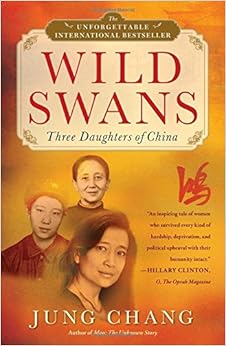
Image result for wild swans

“It was a time when telling fantasies to oneself as well as others, and believing them, was practiced to an incredible degree…A large part of the population was swept into this confused, crazy world. ‘Self-deception while deceiving others’ (zi-qi-qi-ren) gripped the nation.”

Jung Chang, Wild Swans: Three Daughters of China

I know what you’re thinking: How on Buddha’s still-somewhat-green Earth could Jung Chang have presaged all the way back in 1991 through her book Wild Swans what would happen to the U-nited States of America in 2017? The answer, of course, is that she didn’t; she was writing about growing up in China before, during and after one of the most sinister leaders of the 20th century, Mao Zedong.

Kind of ironic (READ: scare the quills off a porcupine’s balls) that you can read the above passage and say to yourself, Wow! That so captures life today under Donnie T., Spicy Spice and the Grim Reaper.

Lest we forget, though, Jung Chang did a mind-blowing job of capturing 20th-century Chinese history from the perspective of three generations of females in a narrative that is at once memoir, social critique and eyewitness account to one of the most tumultuous eras in modern history.

Mao’s Reign of Terror, which was masked by such euphemistic banners as Cultural Revolution and Great Leap Forward, was in fact on the same sub-human level as the French Revolution’s real la Terreur, Lenin’s Bolshevik Revolution, Pol Pot’s Killing Fields, and Rwanda’s 1994 genocide, to name but a few of the blemishes on civilization’s track record over the last couple of hundred years.

Along with Nicholas D. Kristof and Sheryl WuDunn’s China Wakes: The Struggle for the Soul of a Rising Power, Wild Swans should be mandatory reading for anyone trying to get a handle on where China has come from and where it’s heading in the future.

Leave a comment

Filed under Uncategorized

Writing a Book Blurb

Image result for crazy person

In a politically charged world, whose electric charge will carry the day? Will it be the protons or the electrons?

Only one man and his drunk, automobile-driving cat will be able to unlock the mystery. Join I.M. Anutbar and Toonces as they weave their way through Washington’s subterranean world of alternating and direct currents.

On their path to modifying the city’s current and voltage, they’ll need to reach out to a most unlikely ally: E.T.

But will they make it out alive? Will they be trumped by The Republic? Join this dynamic duo as they duel with outlandish bureaucrats in epic jousting tournaments that will have you running to the bathroom in pain and joy!

Imagine cruising the aisles of a bookstore with your sunglasses on, full-length trenchcoat trailing on the floor behind you, and then coming upon this book blurb on the back cover of a novel! Now that’s how you entice a reader! Or, maybe, not so much.

S. Katherine Anthony over at Writers After Dark  (@WritersAfterDrk) has written an informative piece called “7 Tips for Writing a Book Blurb.” You can read the post yourself, but essentially Ms. Anthony sums up the book blurb as follows:

“A book blurb is an important tool in convincing your readers to buy your book. Essentially, it’s a sales pitch. And you want it to be KILLER.”

Check out Writers After Dark for this and other great pieces on the craft of writing.

Leave a comment

Filed under Uncategorized