Quote of the Day

Image result for unexpected

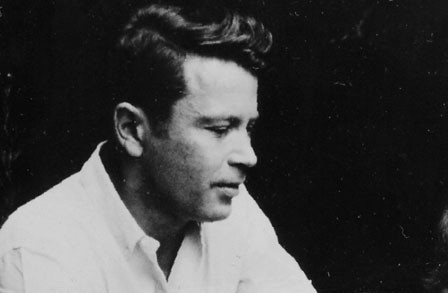
“I myself, as I’m writing, don’t know who did it. The readers and I are on the same ground. When I start to write a story, I don’t know the conclusion at all and I don’t know what’s going to happen next. If there is a murder case as the first thing, I don’t know who the killer is. I write the book because I would like to find out. If I know who the killer is, there’s no purpose to writing the story.”
Haruki Murakami

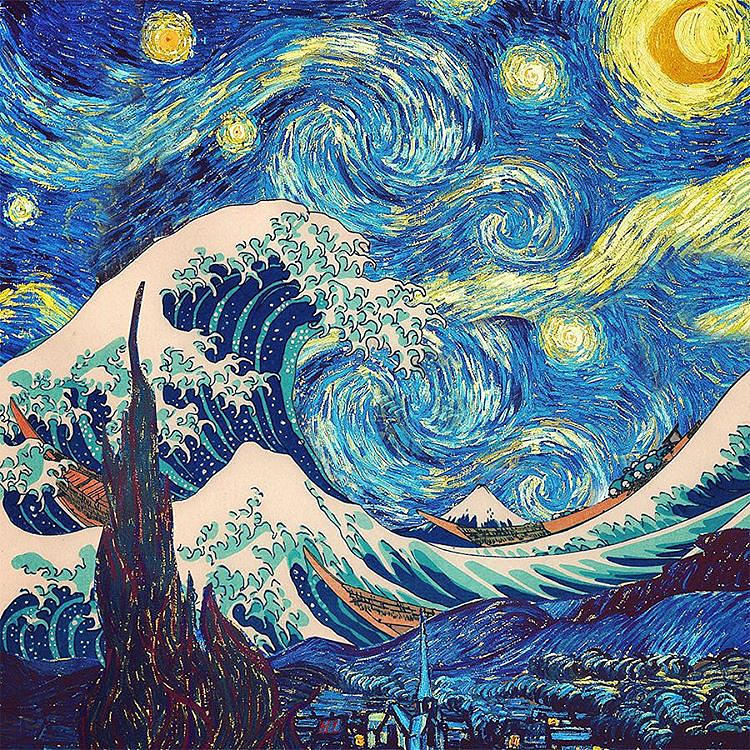
Expect the unexpected. That’s today’s theme. Just when fit looks like it’s about to hit the shan – with everything nicely falling apart on the way – life has a Ha-Ha-Ha-funny way of swooping in and providing a much-needed set of paddles and life jacket (remember, ’cause you’re up a river and all).

Alternatively, just when things look all la-dee-da, peaches and freaking cream, rainbows sprouting out of frigging manholes, you get whacked over the head by a 2×4.

Boom! Eat it!

Even novelists, the grand puppeteers of the world, don’t understand how everything will unfold in their made-up universes of Plato-like, cave-dwelling prisoners. Theirs is to observe the flames on the wall, take their cues from human nature, and then pen the next sentence. Then a paragraph. And then a page and chapter and – if they’re lucky – a full-length story. If they’re really lucky, they’ll still be conscious and breathing when the last word is down on paper, all the answers (hopefully) answered somewhere along the way.

When the unexpected does – not if – happens, keep in mind something that the great Joseph Conrad once wrote: “Life has no meaning. Each of us has meaning and we bring it to life. It is a waste to be asking the question when you are the answer.”

fin

Leave a comment

Filed under Uncategorized

iFear: Cell Phones & Social Media in a Brave New Era

Image result for social media danger

Becky Mansfield over at Your Modern Family wrote a somewhat chilling piece on the extent to which cell phones and social media have altered a generation – in the not-so-good ways every parent fears – called “The scary truth about what’s hurting our kids.”

Reporting on empirical data presented through a number of mediums, notably Dr. Jean Twenge’s research and the findings she presented in her recent book, iGen:Why Today’s Super-Connected Kids Are Growing Up Less Rebellious, More Tolerant, Less Happy–and Completely Unprepared for Adulthood–and What That Means for the Rest of Us., Ms. Mansfield helps break down some alarming information in an easily digestible, if uncomfortable, way.

Without mincing words, Dr. Twenge has found that spikes began occurring in teen/tween angst, depression, anxiety, ADHD, sleeplessness and, in some cases, thoughts of suicide in 2012, the same year the first iPhone was released. Since then, the numbers are getting worse, not better. Here’s a summary per the above article of a few related stats:

1 in 5 children has mental health problems

The article does offer coping strategies to parents, but if we as adults have a somewhat unhealthy relationship with all these new gadgets, one can only imagine how hard it is for younger people to navigate these waters without a considerable amount of difficulty. This is doubly true when it comes to bullying. Imagine having your least desirable enemies armed with the ability to follow you remotely to your bedroom through social media on a daily basis. Where does someone’s “safe place” become in an age when we are always connected?

As if anyone needs more proof of how serious this problem is, the article from the NYT I wrote about from October 11, 2017 (@simonwilliam: “Why Are More American Teenagers Than Ever Suffering From Severe Anxiety“) is still on the website’s most popular emailed stories – 11 days after it went up, a longevity I’ve not seen before on that site’s page.

Ultimately, the onus lies on us, as parents and adults and mentors and teachers, to lead by example. But that’s easier said than done. High-tech gizmos aren’t going anywhere, and the world is only becoming more interdependent. Suddenly those fears our grandparents had that our parents’ minds were being poisoned by the gyrations of Elvis Presley and the absolute lack of decorum that the Beatles displayed (with shaggy hair!)seem like such Leave It to Beaver-like problems now.

Leave a comment

Filed under Uncategorized

Writing/Publishing Jobs

Here are a couple of job opportunities, one for a correspondent in Seoul and the other for a three-month contract to proofread for the Toronto offices of HarperCollins.

For writers in Seoul:

United Press International is looking for a correspondent to be based in Seoul, South Korea, to cover breaking news; produce enterprise reporting on issues of global importance; and write features on culture and lifestyle topics.

For professional proofreaders:

HarperCollins is looking for a proofreader to ensure that all materials published by Harlequin are delivered to the printer or online retailer without spelling, grammar or typographical errors, meeting all editorial house style and typesetting standards.

Leave a comment

Filed under Uncategorized

Poetry Contest


Got a poem in you? Would you like $500 for your effort? Then click here and check out Realistic Poetry International’s poem contest. Note: entry fee is $4.00 per submission.

5 Comments

Filed under Uncategorized

Quote of the Day


“No wonder we cannot appreciate the really central Kafka joke: that the horrific struggle to establish a human self results in a self whose humanity is inseparable from the horrific struggle. That our endless and impossible journey toward home is in fact our home.”

David Foster Wallace, Consider the Lobster and Other Essays

David Foster Wallace is one of those towering figures of American literature whose legacy is as profound as his persona remains enigmatic, at least to many of us on the outside.

While he wrote both fiction and non-fiction – and with his non-fiction he wrote the gamut, from tennis and tornadoes to politics and pornography – today he is most widely remembered for his prose fiction, specifically Infinite Jest, which is seen by many as his magnum opus.

Set between an addicts’ halfway house and a tennis academy, Infinite Jest is a modern-day A Confederacy of Dunces, a reality where communists and pinkos and blockhead detectives are no longer the bad guys; it’s the entertainment industry as a whole, the shallow nature of television, and how “irony and ridicule are entertaining and effective, and that, at the same time, they are agents of a great despair and stasis in U.S. culture…”

A man of many interests and proclivities, Wallace has been described as someone who “wanted to progress beyond the irony and the metafiction associated with postmodernism.” Early in his career he was compared to writers such as Thomas Pynchon and John Irving, but the list expanded as the years passed – as did the many authors whose careers he would influence.

According to his father, Wallace suffered from depression for at least two decades. Sadly, another part of Wallace’s life would be compared to that of John Kennedy Toole at the very end, when David Foster Wallace took his own life in 2008. He was 46.

Leave a comment

Filed under Uncategorized

Gord Downie: Quote of the Day


“Poetry is a voice that characterizes a nation. We should become a nation of poets rather than America-hater. It’s certainly more interesting.”

— Gord Downie, Canada’s rock-poet laureate

Canada is a nation in mourning. Tributes and farewells and love letters will continue to pour in, but we will never have him again. He has returned to that eternal and ethereal place among the stars where the brightest among us shine in perpetuity.

For reasons so many of us contemplated on nights filled with loud music, excessive drinking and cloud-filled rooms, the Hip never made it big in the States like Alanis Morissette, Rush, Shania Twain, Justin Bieber, Bryan Adams, Celine Dion, Avril Lavigne – the list goes on and on of Canadians who’ve made it mega-huge south of the border.

So why not The Tragically Hip? we asked on these now-fuzzy nights that memory has relegated to dark, hard-to-reach corners of our post-addled minds. How is there justice in this world if the Hip can’t be recognized for their talent and Gord Downie for his sheer brilliance?

That – not the current political climate – was all the proof we needed that something was awry not in Denmark, but across the 49th.

And then as we – and the Hip – grew older, we became more circumspect. We donned suits and ties, secured jobs and started families. We worried about mortgages and sicknesses. We quit smoking, drank less, and only smoked pot at get-togethers preceded by “10th” or “20th” or “25th.”

We didn’t listen to music as much. Hip album covers, which were once so reverentially  removed from the CD cover and read between friends, thick as thieves with this musical treatise in our hands, were bygone items replaced by screenshots and digital pics. We’d visit a website from time to time, read a thing or two about someone, but it wasn’t the same because we were alone when we did this. It just wasn’t the same as it used to be.

Today, so poetic that Gord has faded with the last of our season’s dying embers, we prepare for the cold, biting winds and relentless chill to the early mornings/late nights, and what feels like – to us Canadians, at least –  terminal darkness.

Or, as a contemporary of Gord Downie still sings so “full of grace”:

the winter here’s cold, and bitter

it’s chilled us to the bone

we haven’t seen the sun for weeks

too long too far from home

I feel just like I’m sinking

and I claw for solid ground

I’m pulled down by the undertow

I never thought I could feel so low

oh darkness I feel like letting go

But the darkness, of course, is not eternal. The light shines in the darkness and the darkness has not overcome it, and all. It will ebb and flow, and when we emerge on the other side, slightly worse for wear, we will still have him. That is our gift.

In short, Gord was right. We don’t need to be a nation of America-haters or begrudge their inability to venerate the Hip. We have them, all to ourselves, forevermore.

“The place of honor that Mr. Downie occupies in Canada’s national imagination has no parallel in the United States. Imagine Bruce Springsteen, Bob Dylan and Michael Stipe combined into one sensitive, oblique poet-philosopher, and you’re getting close.”

In the end, his poetry won out. That’s what we remember. That’s what we’ll take with us, as individuals and as a country, as we continue our journeys into the vast unknown, a place occupied by Wheat Kings and heavenly lyricists.

P.S. To read more of Gord Downie’s writing, check out Gord Downie Writing.

Leave a comment

Filed under Uncategorized

Ode to the Night, Ode to Gord


Insomniacs of the World, Good Night.

I can see the line of your brassiere.

I can contemplate it from here.

There’s no need for breathlessness

when we’re so far apart

I see us writhing in a phone booth

or laid back in the dewy grass of our youth

and gathering our sweetnesses

and wishing on the Neverstar.

And happy days of electrical smiles

and loving evenings falling down in piles

and not imagining a restlessness

that could keep us apart.

If I could sleep there’s a chance I could dream

and reconjure all of those vivid scenes.

O insomniacs of the world, good night.

No more wishing on the Neverstar.

— Gordon Downie (1964-2017)

Leave a comment

Filed under Uncategorized

It was a dark and stormy night…


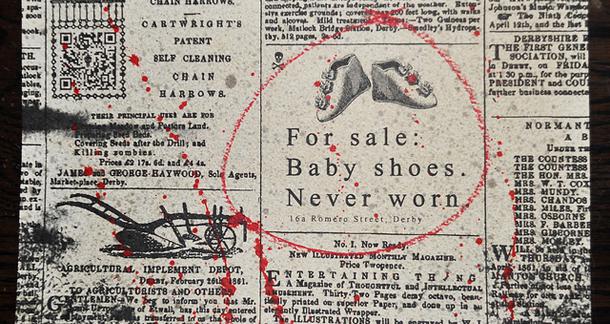
“For sale: baby shoes, never worn.”

You may be familiar with the above six-word story. Legend (stress the “legend”) has it that Hemingway bet some fellow colleagues that he could spin a “novel” (stress the use of this word as an adjective) in exactly six words – and off the top of his head, no less. We now know this as flash fiction, and while it’s suspect that this event ever took place, it’s still a powerful example of the maxim “less is more.”

You may also be familiar with the title of this post, what is considered by some pundits to be the worst opening to a book, what Writer’s Digest called the “literary posterchild for bad story starters.” Sorry, Mr. Bulwer-Lytton.

“It was a dark and stormy night; the rain fell in torrents — except at occasional intervals, when it was checked by a violent gust of wind which swept up the streets (for it is in London that our scene lies), rattling along the housetops, and fiercely agitating the scanty flame of the lamps that struggled against the darkness.”

Well, as it turns out, I received a challenge today. A literary challenge. From a Goodreads bot. Let me be clear about something: I don’t take no literary challenges from a freaking nameless, faceless piece of software.

The challenge? Write a horror story in two sentences. I did not shrink from this herculean task. I stood up to the bots of the world.

If you’d like to read my story on Goodreads, click here.

Leave a comment

Filed under Uncategorized

“A Baroque Wall-Fountain in the Villa Sciarra”


Something about the title of this poem just makes me think of The English Patient, as a troubled yet humane Hana helps carry the man known as the EP up from the train and towards the bomb-damaged Villa San Girolamo.

But this post  isn’t about Michael Ondaatje. It’s about another glowing star in the sky of wordsmiths and lyricists, Richard Wilbur. As Daniel Lewis reported in The New York Times – “Richard Wilbur, Poet Laureate and Pulitzer Winner, Dies at 96” – Mr. Wilbur died Saturday.

Per the NYT article:

“[Wilbur] received his first Pulitzer in 1957, and a National Book Award as well, for “Things of This World.” The collection included “A Baroque Wall-Fountain in the Villa Sciarra,” which the poet and critic Randall Jarrell called “one of the most marvelously beautiful, one of the most nearly perfect poems any American has written.”

So, without further ado, here’s the poem in its entirety:

Under the bronze crown
Too big for the head of the stone cherub whose feet   
      A serpent has begun to eat,
Sweet water brims a cockle and braids down
            Past spattered mosses, breaks
On the tipped edge of a second shell, and fills   
      The massive third below. It spills
In threads then from the scalloped rim, and makes
            A scrim or summery tent
For a faun-ménage and their familiar goose.   
      Happy in all that ragged, loose
Collapse of water, its effortless descent
            And flatteries of spray,
The stocky god upholds the shell with ease,
      Watching, about his shaggy knees,
The goatish innocence of his babes at play;
            His fauness all the while
Leans forward, slightly, into a clambering mesh   
      Of water-lights, her sparkling flesh
In a saecular ecstasy, her blinded smile
            Bent on the sand floor
Of the trefoil pool, where ripple-shadows come
      And go in swift reticulum,
More addling to the eye than wine, and more
            Interminable to thought
Than pleasure’s calculus. Yet since this all   
      Is pleasure, flash, and waterfall,   
Must it not be too simple? Are we not
            More intricately expressed
In the plain fountains that Maderna set
      Before St. Peter’s—the main jet   
Struggling aloft until it seems at rest
            In the act of rising, until   
The very wish of water is reversed,
      That heaviness borne up to burst   
In a clear, high, cavorting head, to fill
            With blaze, and then in gauze   
Delays, in a gnatlike shimmering, in a fine
      Illumined version of itself, decline,
And patter on the stones its own applause?
            If that is what men are
Or should be, if those water-saints display   
      The pattern of our aretê,
What of these showered fauns in their bizarre,
            Spangled, and plunging house?
They are at rest in fulness of desire
      For what is given, they do not tire
Of the smart of the sun, the pleasant water-douse
            And riddled pool below,
Reproving our disgust and our ennui   
      With humble insatiety.
Francis, perhaps, who lay in sister snow
            Before the wealthy gate
Freezing and praising, might have seen in this   
      No trifle, but a shade of bliss—
That land of tolerable flowers, that state
            As near and far as grass
Where eyes become the sunlight, and the hand   
      Is worthy of water: the dreamt land
Toward which all hungers leap, all pleasures pass.

Leave a comment

Filed under Uncategorized

Branding for Editors in T.O.

FYI, for more FYI from @EditorsToronto, click here.

What makes for good branding in the world of freelance editing, and how does it come about? How can editors communicate their brand to attract clients who will be a good fit for their skills, goals, and experience?

Join us on Tuesday, October 24, for a panel discussion and workshop geared to helping freelance editors hone the messages they use to communicate with prospective clients. Freelance writer and editor Marnie Lamb of Ewe Editorial Services will speak about how she developed her brand organically; entrepreneurial consultant Donovan Dill will speak about branding as the bedrock of any business; and freelance magazine editor/incubator Carolyn Camilleri will lead a mini-workshop to help editors define and refine their brand to attract the right clients.

When: Tuesday, October 24, 7 PM
Where: Centre for Social Innovation (CSI), 215 Spadina Ave., Toronto, Alterna Savings room, fourth floor
IMPORTANT: The CSI building closes at 6 PM. If there is no Editors Toronto greeter at the front door when you arrive, please enter through the Dark Horse Espresso Bar (attached to the CSI, on Spadina, open until 8 PM), and take the elevator up to the fourth floor. If the Dark Horse café is closed when you arrive, please text Lee, programs chair, at 647-607-0416, and we will send someone to open the door.

Leave a comment

Filed under Uncategorized