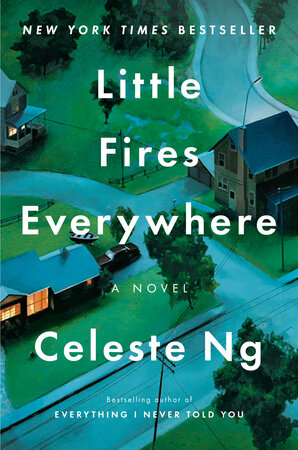
Quote of the Day


“To a parent, your child wasn’t just a person: your child was a place, a kind of Narnia, a vast eternal place where the present you were living and the past you remembered and the future you longed for all existed at once.”

— Celeste Ng, Little Fires Everywhere

I’m currently reading this exquisitely written novel with the rest of my fellow curlers and have been deeply moved by the pathos apparent at every turn of the page in Ms. Ng’s second literary fiction effort.

I’ll save my final thoughts on the book as a whole once I’m done, but so far me likes very, very muchly.

Leave a comment

Filed under Uncategorized

To Marry Or Not to Marry?


There’s a scene in Guy Ritchie’s film Snatch that made me laugh the first time I saw it and continues to make me laugh whenever I watch it on YouTube. The late, great Dennis Farina is returning home to the States after a less-than-successful trip to England. When the customs agent asks him, “Anything to declare?” Farina, all rough-looking and beat-up, responds, “Yeah, don’t go to England.”

Gabrielle Zevin might not put it so bluntly, but if the bestselling author were asked if she had anything to declare about marriage, she might well respond, “Yeah, don’t do it. In England or anywhere else for that matter.”

Writing for The New York Times, Ms Zevin penned an article titled “The Secret to Marriage Is Never Getting Married” that made me stop and take a long, hard look at my own experiences.

As the only person I know who has been down both roads, as a husband in a traditional marriage and a partner in a common-law relationship, I don’t have anyone else to compare notes with, so balance what I say with several grains of salt as you read on.

For me there are concrete differences in the day-to-day mechanics between the two relationships, both good and bad. The stability of marriage is a definite plus. Even after a bad fight, your first thought (hopefully) is not I can’t do this and will probably seek out a divorce lawyer tomorrow, but instead Things will be better tomorrow and this problem will work itself out.

Alternatively, every major decision made in a common-law relationship is measured, at least to some degree, as Is this what I want? or Will this make us happier/better as a couple? In that way, you feel (even if it’s not entirely true) that  you have more control over your destiny than if you were in a legally binding marriage.

However, one of the very things that makes a marriage so stable (Things will be better tomorrow) is precisely what leads to so many of their downfalls: Without the need or impetus to encourage change within yourself and your partner in times of truculent disagreements, it’s easier to do nothing, kind of like when you get a minor cut, think it’s nothing, and then watch in horror as it festers, becomes diseased, and ultimately leads to a hospital visit and major surgery.

At the same time, the lack of a “societal-based” stability in a common-law relationship can unnecessarily aggravate insecurities and everyday annoyances that some married couples can dismiss as Oh, that’s so Jim! A total Jim-ism! or Yeah, Pam does that thing with her toothbrush every night!

I suppose the easy answer to this question of which path to follow would be to talk about it openly with your equal-but-somewhat-better half and come to a decision you both agree will make the relationship flourish as you move forward. After all, flourish rhymes with happy…in some language, right?

I’ll let Ms. Zevin close this one out. Per her article:

Sometimes I think the secret to a long and happy marriage is never to get married in the first place, although there are surely married couples that are as happy as we are.

When I say I don’t believe in marriage, what I mean is this: I understand the financial and legal benefits, but I don’t believe the government or a church or a department store registry can change the way I already feel and behave.

Or maybe it would. Because when the law doesn’t bind you as a couple, you have to choose each other every day. And maybe the act of choosing changes a relationship for the better. But successfully married people must know this already.

3 Comments

Filed under Uncategorized

Oh Good God! (Plus Cats?)


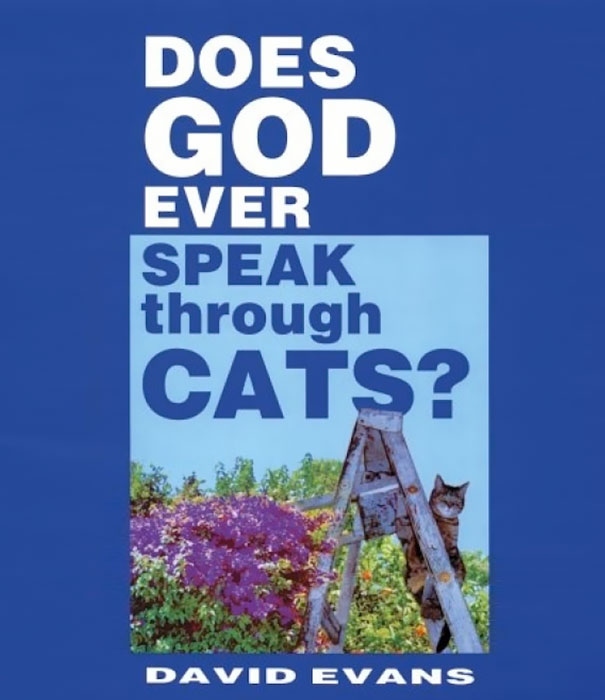
Loyal visitors to this blog might remember the unforgettable classic Dog is God Spelled Backward. Well, it would seem David Evans has something to say about that with his riveting account of the Supreme Being communicating through the very same animal kicked out of the Chinese Zodiac by the rat, Does God Ever Speak through Cats?

I think I’ll have to start a new Title of the Day post here. There’s just too much gold out there going unmined.

1 Comment

Filed under Uncategorized

Overworked. Underpaid. Dead.

Image result for karoshi


Okay, this article gave me serious pause: “Young Worker Clocked 159 Hours of Overtime in a Month. Then She Died.

Per the article in the NYT:

Miwa Sado, a young journalist for Japan’s state-run broadcaster, spent the summer of 2013 frantically covering two local elections in Tokyo.

Over the course of a month, she clocked 159 hours of overtime. She rarely took weekends off. She worked until midnight nearly every night. On her birthday, June 26, she emailed her parents, who thought she sounded weak.

Not quite a month later, just days after the second election, she died of congestive heart failure. She was 31.

The case — the latest high-profile example of karoshi, or “death from overwork” — came to light only after the broadcaster, NHK, announced it this week.

I don’t know what’s worse, that a human being died of working too much, or that the Japanese actually have a word for this atrocity. (Koreans have their own word for this, kwarosa (과로사), as do the Chinese, guolaosi (过劳死)).

Perhaps I will take that break this afternoon that I seem to keep pushing off because there’s too much to do and not enough hours to finish it all.

Leave a comment

Filed under Uncategorized

Quote of the Day

Image result for ann patchett

“Hope is a horrible thing, you know. I don’t know who decided to package hope as a virtue because it’s not. It’s a plague. Hope is like walking around with a fishhook in your mouth and somebody just keeps pulling it and pulling it.”
Ann Patchett, State of Wonder   

Well, I think we all know who packaged joy as a package of doom — Zeus! That otherworldly dude always had package issues. And what was Epimetheus doing when he went against the advice of his bro of bros, Prometheus, and allowed his bride, Pandora, to accept this wedding gift? Folly, I say! Wedding gifts are bound to cause friction at some point in a relationship.

But back to Ann Patchett, author of numerous works of wonder, including my favourite, Bel Canto, one of the very few books I gave five stars to on Goodreads. If you’re unfamiliar with the PEN/Faulkner Award and Orange Prize for Fiction recipient, make sure you check her out. Both her fiction and non-fiction are equally as great.

Leave a comment

Filed under Uncategorized

Righting: grammer, and dicktion count two as well as Spelling!

Image result for writing properly

Gail Radley over at The Writer magazine has earned not only my respect, but my r-e-s-p-e-c-t. In an article titled “Not to be: Removing be verbs from your writing,”  she offers a short yet comprehensive checklist on how to edit your writing and cleanse it of some very common errors which even the best of us can make from time to time (i.e. pretty much all the time).

I’ll let her piece stand on its own, but if you have any interest in tidying up and doing a little dusting around the edges of your written work, make sure you check out this article and put its teachings into practice. Do this and maybe you too can write pretty one day!

Leave a comment

Filed under Uncategorized

2017 Nobel Prize for Literature

Image result for Kazuo Ishiguro

Well, surprise, surprise. The good folks over at the Swedish Academy decided to give this year’s Nobel Prize for Literature to a writer! (Don’t get me started on their past choices, one of which includes awarding the prize in 1974 to Eyvind Johnson and Harry Martinson, both members of the Swedish Academy at the time.)

Most people will be familiar with Kazuo Ishiguro through the film adaptation of his Man Booker Prize-winning novel, The Remains of the Day, but Ishiguro has written much more than just that gem over the years. (Never Let Me Go!) In fact, I’m pretty sure all of his novels have been recipients of one award or another.

Born, quite literally, in the smoldering ashes of Nagasaki, Japan in 1954, he and his family moved to England when he was six years old. In recognition of his 35-year professional writing career, the Nobel Committee had this to say:

The Nobel Prize in Literature for 2017 is awarded to the English author Kazuo Ishiguro

“who, in novels of great emotional force, has uncovered the abyss beneath our illusory sense of connection with the world”.

Congratulations to Mr. Ishiguro, one of only three writers I’ve ever heard the great David Mitchell says he looks up to (the other two being A.S. Byatt and Seamus Heaney).

Per my good friend Allan W.’s question, the Nobel Prize for Literature has not always been given to novelists. Aside from Robert Zimmerman winning it as a song writer, Svetlana Alexievich, a writer and journalist from Belarus, became the first nonfiction writer to win the award in half a century.

Leave a comment

Filed under Uncategorized

Quote of the Day

Image result for just be buddha

“You are as you are until you’re not. You change when you want to change. You put your ideas into action in the timing that is best. That’s just how it happens.

And what I think we all need more than anything is this: permission to be wherever the fuck we are when we’re there.

You’re not a robot. You can’t just conjure up motivation when you don’t have it. Sometimes you’re going through something. Sometimes life has happened. Life! Remember life? Yeah, it teaches you things and sometimes makes you go the long way around for your biggest lessons.

You don’t get to control everything. You can wake up at 5 a.m. every day until you’re tired and broken, but if the words or the painting or the ideas don’t want to come to fruition, they won’t. You can show up every day to your best intentions, but if it’s not the time, it’s just not the fucking time. You need to give yourself permission to be a human being.”

— Jamie Varon

As people who know me well know very well, my mouth is somewhat akin to that of a sailor on most days. Because I don’t shave regularly? No. Because I have salt in my mouth from my (slight) addiction to the NEW Ruffles Salt & Vinegar chips? Not exactly.

Because I can swear ’em up as good and goodly as anyone out there.

However, I’m very selective about using foul language in writing, as it almost has a more powerful effect than using it verbally. My rule, by and large, is to use it only (a) in dialogue, (b) sparingly for effect in narrative, or (c) whenever the hell you want if you’re writing a blog.

I enjoy coming across people online who aren’t famous but who have a point of view, or at the very least an interesting way of writing about the world. Jamie Varon is one such person. On top of running her own site, called Jamie Varon: Writer of All the Feelings, she’s also the author of a couple of books.

I came across today’s QOTD, loved it from the get-go, and hope you get something out of it, too.

2 Comments

Filed under Uncategorized

2017 English GG Finalist for Young People’s Literature – Text

Image result for everything beautiful is not ruined

A very big and resounding congratulations to my friend and Curling Was Full honourary member Danielle Younge-Ullman, whose most recent novel, Everything Beautiful is Not Ruined (great title, eh?), has just been named to the 2017 Governor General’s English Finalist List for Young Literature – Text.

I’d like to say good luck to the other finalists, but in truth I just want Danielle to win, so I’m sorry you other four guys.

Leave a comment

Filed under Uncategorized

Why Do Smart People Do Stupid Things?

Image result for troy mcclure, smoke yourself thin

I love it when the title of an article both creates its own post title for me and answers a burning question many of us have been wondering about for years!

Writing for The Guardian, Andre Spicer, co-author of The The Stupidity Paradox: The Power and Pitfalls of Functional Stupidity at Work, penned an informative piece called “Why do smart people do stupid things? It’s simple.” Long answer short: high IQ means superior analytical intelligence, not creative or practical intelligence.

Case in point.

“Being smart can come at a cost. Asking tricky questions, doing the research and carefully thinking things through takes time. It’s also unpleasant. Most of us would rather do anything than think. A recent study found that when left alone in a room, people preferred to give themselves electric shocks than quietly sit and think. Being smart can also upset people. Asking tough questions can quickly make you unpopular.”

Read the full article through the above link for more insight into this “smoke yourself thin” paradox.

Leave a comment

Filed under Uncategorized