Author Archives: harrisrh

A Little Fluff Never Hurt Nobody

Image result for fluff

Let’s be clear here. A little literary fluff, in moderation, is a good thing. Like drinking a case of beer (without anyone else’s oral assistance) while watching Hockey Night in Canada. Or reciting poetry to sharpen your addled brain. Or indulging in poutine after said night of debauchery and preparing for the poetics part the following morning (a person needs energy!).

That’s all chicken noodle fluff for the soul.

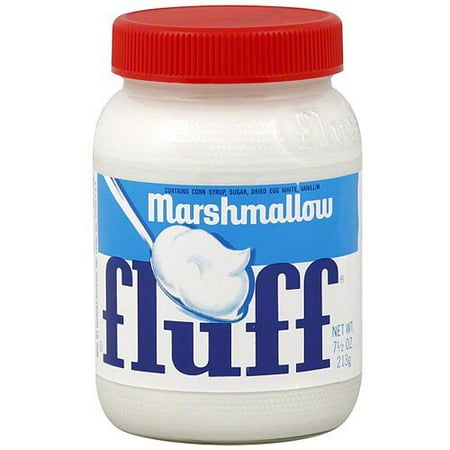
Whatever the hell it is that made it onto this post as the Pic of the Day is not a good thing, in moderation or even once in your life. REPEAT: If you see the above product while shopping, call in a Code Blue, throw yourself in a tent, and rub those rosary beads you carry with you for good luck. Oh, and pray the jar doesn’t consume you.

Last week, I finished this month’s book club novel, Jennifer Egan’s Manhattan Beach, an impressively researched story about a young lady coming of age in New York City in the late 1930s and early 1940s,  freeing me up for a bit in between Curling Was Full choices. (Spoiler alert: Everyone dies at the end of Manhattan Beach when the Manhattan Project goes south and wipes out all the main characters, who’d taken refuge on a beach. Kind of a lame ending.)

Obviously I reached for the marshmallow fluff next, and just finished my latest Jack Reacher book (#20 in the series), Lee Child’s Make Me. I am now as content as a pig in…umm…a blanket?

Anyway, one of the reasons Mr. Child has my eternal love is that he doesn’t pretend to be anyone he’s not (or should I say JR doesn’t?). He has you hanging from page one, kicks some ass along the way in Nowhere, USA, then brings everything all together with a little bow on top. Nice.

But Lee Child’s real “piece of resistance” is the way he throws in facts, figures and stats. Unlike the Dan Brown Paradox, Mr. Child is not pretending to solve a centuries-old clue (except how some guys are always jacked up on testosterone maybe) when he discusses heavy subjects like suicide, the Gettysburg Address, and the dark web, all three of which he addresses in Make Me. More than that, he somehow makes it relevant to chasing bad guys around places like Mother’s Rest, Nebraska.

This got me to thinking, though. Trusting Goodreads as I do, I was curious what readers around the world considered the biggest pile of fluffy fluffiness. Well, I – and by extension you – now have the answer. Here’s the full list, but the Top 10 Most Popular Fluff Books goes like this, with Stephenie Meyer wearing the Empress’s New Clothes, Sophie Kinsella donning the queen’s crown, and Stephanie Perkins taking home the raciest title award.

1. Confessions of a Shopaholic, Sophie Kinsella

2. Twilight, Stephenie Meyer

3. Bridget Jones’s Diary, Helen Fielding

4. The Devil Wears Prada, Lauren Weisberger

5. New Moon, Stephenie Meyer

6. Can You Keep a Secret?, Sophie Kinsella

7. One for the Money, Janet Evanovich

8. Eclipse, Stephenie Meyer

9. Breaking Dawn, Stephenie Meyer

10. Anna and the French Kiss, Stephanie Perkins

Leave a comment

Filed under Uncategorized

10 Literary Blogs You Should Be Reading

Image result for literary blogs

Umm…apparently I didn’t get the memo about applying to be on this list. Must be my freaking fax machine and telex network, both of which are on the Fridolin Fritz and causing me so many problems these days!

Anywho, according to JW McCormack over at theculturetrip.com, these are the “10 Literary Blogs You Should Be Reading.” Thank you to EJK for sending this link over my way. In alphabetical order, the 10 sites are:

Leave a comment

Filed under Uncategorized

Stress & Language (Or Words to Avoid for Writers)

Image result for stressed out and speaking

According to Lindsay Dodgson, “Using any of these words could indicate that you are more stressed.”

Stress, of course, is not a funny thing. However, what’s funny about this list of words is that it’s a real what’s what! for budding writers to avoid.

In a beautifully shaped nutshell:

  • A new study has identify words linked to high stress levels.
  • It found that “really,” “so,” and “very” can be giveaway signs.
  • Researchers determined stress by examining white blood cells.
  • They believe listening to medical patients’ vocabulary could let doctors give more accurate diagnoses.

Or, to paraphrase a little-known writer, last name King, first name Steve Baby, “Stay the **** away from adverbs like they’ve got a raging case of ***ing face herpes and toe jam.”

Further to that, and per Ms. Dodgson’s article, paraphrased:

If someone is stressed, they tend to talk less, but they also use more adverbs like “really,” and “incredibly.” According to Matthias Mehl, a psychologist at the University of Arizona and lead author of a study on this subject reported to the scientific journal Nature, these words may act as “emotional intensifiers,” suggesting the speaker is more “aroused,” meaning excited or alert.

Now, of course, the other funny thing is that I think we already knew that, not by the adverbs, but by the colourful language most of us display when we’re stressed out. For example, consider the following dialogues and check (O) for “stressed out” or (X) for “cool as a head of napa cabbage kimchi”:

1. A: How’s it going?

     B: Well, I just got ****ing fired from my *%$&* job at Pet Smart for mistakenly feeding the birds to the cats this morning, and came home to an eviction notice from my ***hat super.

2. A: Sorry to hear about your exams. You really shat the bed, huh? Fully parked a trout on those bad boys. I guess that’s four years down the drain.

     B: No, no. It’s all good. I look at it as money well spent on supporting our economy. Go Falcons!

3. A: Hey, did you just shave?

     B: Nope. Raging case of face herpes, I’m afraid. Gonna $%&^* kill the guy at work who thought it was funny to lick my face this morning ’cause I smelled so $%&*ing good.

Leave a comment

Filed under Uncategorized

In Flanders Fields

Image result for flanders fields

In Flanders Fields

In Flanders fields the poppies blow
Between the crosses, row on row, 
That mark our place, and in the sky, 
The larks, still bravely singing, fly, 
Scarce heard amid the guns below. 

We are the dead; short days ago
We lived, felt dawn, saw sunset glow, 
Loved and were loved, and now we lie
In Flanders fields. 

Take up our quarrel with the foe! 
To you from failing hands we throw
The torch; be yours to hold it high! 
If ye break faith with us who die
We shall not sleep, though poppies grow
In Flanders fields

John McCrae, 18721918

Lest we forget, this remains one of the most important and poignant poems.

Today, November 11, 2017, marks the 99th anniversary of the end of World War I, the Great War – the War to End All Wars – and is being observed in all member states in the Commonwealth of Nations as Remembrance Day (Veterans Day in the U.S.).

This poem is especially close to the hearts of all Canadians, as it was a Canadian, Lieutenant Colonel John McCrae, MD, who penned these words while treating the sick and wounded in Europe during WW I.

Lt. Col. McCrae never made it home, though. He died of pneumonia in 1918, 10 months shy of the end  of the war. Although his poem has endured – nay, blossomed – since then, he never bore witness to what transpired at the eleventh hour of the eleventh day of the eleventh month in 1918; it was at 11 a.m. on November 11, 1918, in the Forest of Compiegne, France, when the Armistice to end World War I signed between the Allies and Germany went into effect.

Elsewhere throughout Europe, church bells rang. It was over.

Leave a comment

Filed under Uncategorized

Quote of the Day

Image result for pain

“Pain demands that I pay attention to it, then tells me random things very loudly. Like a natural process it resists prediction and administration. It can run away with itself. It changes without notice or evident pattern. Pain keeps its secrets. It is like nature that way, like the weather and the ecosystem, economies, earthquakes, rivers, public policy. Pain never lets you simplify complexity. It is the ecosystem of me, in stochastic rebellion against the cognitive me. The disease might kill you or not, but to be sure self-pity will kill you if you let it go unchecked. There’s no avoiding self-pity, there’s no one who is perfectly capable of never falling into it. It is pain’s most dangerous traveling companion. Pain may hold on to you, but it’s self-pity that eats you alive.”

Quinn Norton, “Learning From Pain: On living a continuously interrupted life

Most times I link the Quote of the Day to someone famous that we should have all read by now, but once in a while I come across something from an everyday person like you and me that is well written and resonates through my laptop screen with reverberation-like resonance.

Today’s quotation is one such shining example. Ms. Norton has a specific angle that she’s coming from, she knows of what she speaks, and she has put together a thoroughly informative, touching, and eye-opening piece about a universal subject.

3 Comments

Filed under Uncategorized

Twitter –> Brevity = New Vocab. & 다른 언어 사용

Image result for trailer park boys, twitter

Three guys who’ve never been in my kitchen AND know brevity real good!

While not quite as immediately helpful as the piece by Rachel Thompson on “How to start using hashtags effectively right now,” Josh Wilburne still wants to get Twittery on your ***. Seriously, he even said so. Mr. Wilburne works for that little-cable-car-that-could in San Francisco called @twitter, and has an informative piece to read over titled “Looking After Number One-forty: Solving a number of design challenges.

It’s interesting in ways that people who like Twitter will find interesting.

For me, I found it more empowering that Mr. Wilburne has inadvertently proven that Korean is the greatest language. Ever. In the history of the world. Stamped it. No erasies.

Like Japanese, Korean is compact enough to squeeze a massively massive boatload of thoughts/information into very few characters. Unlike Japanese, however, the Koreans created their script, Hangul (한글: see, six letters vs. two characters), from scratch, making it the only extant written language that was invented!

Therefore, Korean is now the official language of Twitter.

P.S. For anyone curious about the word “brevity,” you could look it up in the dictionary, but you’ll see pretty much the same thing as below. The example they use at dictionary.com about compacting your language like a trash compactor (remember those?) is so amazing that my slight tweest on it practically wrote itself.

brevity

[brev-i-tee]

noun

2. the quality of expressing much in few words; terseness:

“Ironically, it is long-winded Polonius in Shakespeare’s Hamlet who famously says that brevity is the soul of (t)wit(ter).”

Leave a comment

Filed under Uncategorized

November: National Novel Writing Month

Image result for national novel writing month

Yep. If you haven’t stated yet, crack out your quills, attach your feather to a tether, and get writing! The month of November is National Novel Writing Month – subtitle “The world needs your novel.” – or NaNoWriMo for short. (And by “National” they mean “International.”)

Per the blog at IngramSpark, understandably a big supporter of the event:

“In July of 1999 a small group of would-be-authors had the novel idea of each trying to write their own book. They lovingly called it “noveling. What they didn’t know, was they were laying the foundation for what would soon become one of the world’s most widely participated mass-writing events.

NaNoWriMo was established in 2005 as a nonprofit built on the belief that everyone has a story inside. To motivate people to embrace their creativity and bring their stories to life, NaNoWriMo challenges participants to write a 50,000-word novel during the month of November.

While the challenge gives NaNoWriMo a fun and untraditional twist to noveling, the real purpose behind the month-long event is to support and inspire those around the world to share their voice. NaNoWriMo, along with its subprograms (Camp NaNoWriMo, Young Writers Program, Come Write In, and “Now What” Months) champion the power of the human mind to make the world a better place.”

Leave a comment

Filed under Uncategorized

A Literary Blog of Bookies, by Bookies, for Bookies

Image result for bookidote

I like sharing. It warms the cockles of my heart. Which makes me feel warm, a little fuzzy, and somewhat sexy mild. Thus and therefore, let me share a bookish site for all your hardcore bookies out there.

For those interested in keeping up to date with reviews of books new and old, I’ve come across a blog I think is great called Bookidote.

Per the two webmasters who are masters of their own bookish domain:

Bookidote (\ˈboo-ki-ˌdōt\) : Lashaan and Trang’s creation. It is a commitment that holds countless ideas in one word. Three syllables. Nine letters. These two squandered souls firmly believe that books aren’t just a pastime for intellectuals or a mandatory purchase for your studies. Bookidote is much more. It marries books with antidotes, knowledge with cure, imagination with elixir. It refers to the ability that books withhold in swallowing you into a universe and encouraging you to live a unique and different adventure every time you crack open a book. Bookidote acknowledges the fact that books can help you explore ideas, stimulate your imagination and live innumerable lives.

Go check out these two phat cats if you’re looking for something to read or simply learn more about them and their emporium of literary wonders.

UPDATE:

I’m adding (@ivereadthisblog) Anne Logan’s I’ve Read This. Looking for Something Good to Read? blog to what I hope will be a burgeoning list of awesome sites dedicated to books and book reviews.

3 Comments

Filed under Uncategorized

Quote of the Day

Image result for margaret atwood

“Male fantasies, male fantasies, is everything run by male fantasies? Up on a pedestal or down on your knees, it’s all a male fantasy: that you’re strong enough to take what they dish out, or else too weak to do anything about it. Even pretending you aren’t catering to male fantasies is a male fantasy: pretending you’re unseen, pretending you have a life of your own, that you can wash your feet and comb your hair unconscious of the ever-present watcher peering through the keyhole, peering through the keyhole in your own head, if nowhere else. You are a woman with a man inside watching a woman. You are your own voyeur.”
Margaret Atwood, The Robber Bride   

What’s interesting for me is that I remember The Robber Bride as the only Margaret Atwood book I’ve read which made me laugh out loud throughout the novel, but when going over it again today I forgot how heavy some of the writing is from the story.

While a new generation of readers has been introduced to Ms. Atwood – or “Canada’s unrivaled Queen of Letters,” as Eleanor Wachtel once called her – through the recent made-for-TV remake of The Handmaid’s Tale, those of us a bit older know that she has a canon of literature long enough, broad enough, and circumspect enough to shelve an entire library.

I may not have read all of her books, but I highly recomend The Robber Bride, a story that was insired by a Brothers Grimm tale, “[b]ut in her version, Atwood brilliantly recasts the monster as Zenia, a villainess of demonic proportions, and sets her loose in the lives of three friends, Tony, Charis, and Roz.”

Leave a comment

Filed under Uncategorized

Mental Health Alert: Christmas Music

Related image

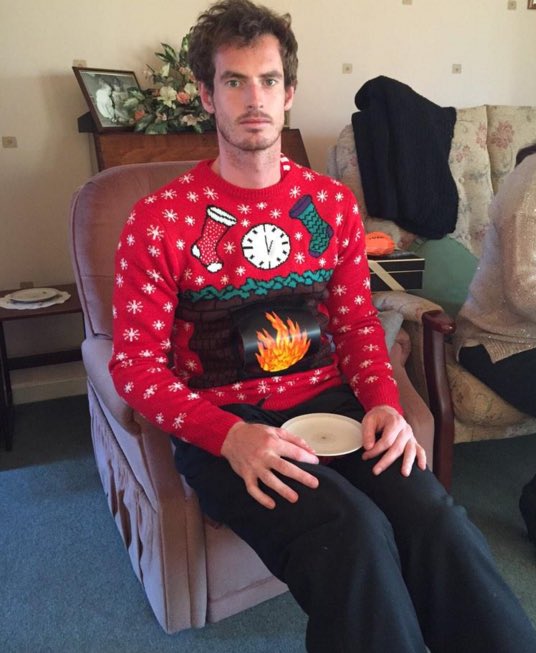
This is frickin’ you on Xmas music for 55 days straight. (P.S. Thanks, Andy!)

I effin’ love IFLScience. In a piece titled “Christmas Music Could Harm Your Mental Health,” the good folks there explain why Christmas music can screw us up. Like, screw us up bad to quite bad.

Now, can someone please pass this memo on to stores that insist on playing the stuff 24/7 from November 1 onwards?

Leave a comment

Filed under Uncategorized