Author Archives: harrisrh

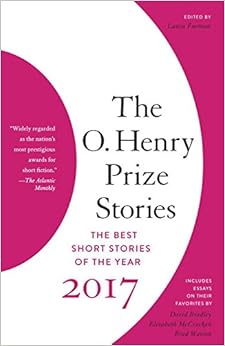
The O. Henry Prize Stories

Image result for o. henry prize stories 2017

The O. Henry Prize Stories for 2017 have officially been announced. For those who enjoy the art form of the short story, you’re sure to find something you’ll like from this year’s list by clicking here. 

Per Wiki:

“The O. Henry Award is an annual American award given to short stories of exceptional merit. The award is named after the American short story writer, O. Henry. The PEN/O. Henry Prize Stories is an annual collection of the year’s twenty best stories published in U.S. and Canadian magazines, written in English.”

Born William Sydney Porter (1862-1910), but better known by his most famous pen name, O. Henry, Porter wrote a boatload of short stories in his day. Among his most well-known works are “The Gift of the Magi” and “The Caballero’s Way.”

While writers like Anton Chekhov and Alice Munro are probably more respected as geniuses of the genre, O. Henry certainly earned his own place in the pantheon of short story authors.

If you want to read some of O. Henry’s goldenest golden nuggets, check out Project Gutenberg, where you can download 19 of his stories for free.

Leave a comment

Filed under Uncategorized

Barack Obama, Telomeres & Ageless Skin

Image result for barack obama, looking cool

In the raging-like-a-bad-case-of-herpes shitstorm that is the hallmark of politics in Washington D.C. right now, it’s comforting to know that the former president has it all figured out: Don’t give a flying **** what the hell is happening out there in the world; undo the top button on your dress shirt; make time to see JT when up in the Great White North; hang with Sir Dick Branson when you feel like it’s “better to be a Virgin member”; and wear cool shades at all times, even at night when you’re secretly pretending to be Corey Hart.

But there’s actually more to looking 50+ Fab if you’re Barack Obama: There are telomeres at play. A lot of telomeres. I’ll let Drake Baer (@drake_baer) explain this in more detail through his post “A Scientific Explanation For Why Barack Obama Looks So Damn Good,” but needless to say President Obama wasn’t just in your class 20 years ago – he was your teacher! (Shout-out to Oil of Olay and the faux Maverick and Charlie on this one.)

All jokes aside, it’s comforting to know that the previous Commander-in-Chief not only has his sanity in tact after eight tough years in office, but that he is enjoying his newfound “retirement” – and looking pretty damn good doing it.

Leave a comment

Filed under Uncategorized

Pride Month: Gareth’s Story

Image result for pride flag

In honour of Pride Month, which kicked off here in Toronto on June 1 and will culminate with the Pride Parade on June 25, I would like to voice my support through a sport I love and one which most people would not connect to the Pride movement.

This is Gareth Thomas’s story. For many of us in North America, we will not be familiar with his name. But make no mistake, Gareth is a larger-than-life figure, literally and figuratively.

Gareth is a national hero. He is one of the greatest rugby players Wales has ever produced. He is also someone who lived a lie for decades on the global stage –  in front of fans, beside friends, surrounded by family – not because he was an evil person or wished harm upon others.

Because he was afraid.

Because he did not want to disappoint a wife he had been married to for five years.

Because he did not want to let down 3 million people who considered him the Welsh incarnation of Mario Lemieux and Wayne Gretzky put together.

Because he was human and, therefore, fallible.

But, mostly, because he was afraid.

He attempted to take his own life several times after his wife left him in 2006. But Gareth Thomas persevered. He arose from the ashes of a shattered marriage, at a time when he later reflected, “I missed her so badly, and hated myself for what I had inflicted on her.”

And like the steamroller-cum-phoenix he was on the pitch, Gareth Thomas found the courage – somehow and in some inconceivable way – to live the life he wanted to live. And the crowning glory to this all was not the records he broke along the way, nor the winning tries, nor the century-strong caps, nor the adulation he earned from scores of die-hard rugby enthusiasts around the world.

It was the support, nay, the love shown to him by his legion of fans, the same fans who stood shoulder to shoulder with him as their God of Rugby gave them “something so simple as honesty” to rally behind on his terms.

Pride Month has become more than a flashy parade, at least in Toronto, that is. It’s about acceptance, honesty, tolerance, friendship, love, equality, and the right to be proud of qualities that celebrate empathy and compassion, and the same traits which make us more humane as individuals and stronger as a society.

On June 25, let us all be loud, let us all be proud.

Leave a comment

Filed under Uncategorized

OAC Confirms Ontarians Value the Arts

Image result for ontario arts council

And this is one of the many reasons I love living in Ontari-ari-o…

New report: Ontarians value the positive impact of arts on quality of life

“The results of the Quality of Life report confirm what we heard as we developed the province’s first Culture Strategy, and show that Ontarians intuitively understand that culture is a fundamentally important part of our lives and communities. I’m proud that our government is taking steps to strengthen the arts and culture sector as we implement the initiatives outlined in the Culture Strategy, and the Ontario Arts Council is an important part of that work.”

Eleanor McMahon, Minister of Tourism, Culture and Sport

Leave a comment

Filed under Uncategorized

Book of the Month: The Imperfectionists

Image result for the imperfectionists

Loved, loved, loved this book! British-Canadian-Man-o’-the-World author Tom Rachman really hit it out of the park with his debut novel, The Imperfectionists (2010). One of the Golden Rules of Writing – as opposed to the “26 Golden Rules for Writing Well” – is to write what you know, and Mr. Rachman(inoff), like a skilled pianist tickling a set of ivories with nimble fingertips that are a natural extension of his hands, did exactly that with a motley crew of characters who were mostly holed up in Rome, Italy.

As with Jennifer Egan’s A Visit from the Good Squad and Kent Haruf’s Plainsong, the numerous “short stories” which make up the novel are very much interconnected. Our job as readers is to connect the dots; Mr. Rachman’s job, as the puppet master, was to spin a series of (in this case journalistic-related) yarns, one after the other, and have each one be strong enough to stand on its own.

Mission accomplished.

Just like the title of the novel suggests, the story is rife with flawed, imperfect, screwed-up misfits – and that recipe for literary deliciousness comes across as nothing short of thoroughly engaging and believable.  Set around a fictional International Herald Tribune-esque newspaper established in Rome by an eccentric millionaire named Cyrus Ott in the 1950s, right up until its demise half a century later, we’re taken on an unforgettable journey through newsrooms and bedrooms, bylines and deadlines, all the while nodding our collective heads up and down and thinking, That’s so true!

Even though Mr. Rachman was only in his early 30s when he penned this book, he manages to come up with some astute, humourous and memorable lines along the way:

“You know, there’s that silly saying ‘We’re born alone and we die alone’ – it’s nonsense. We’re surrounded at birth and surrounded at death. It is in between that we’re alone.”

“If history has taught us anything, Arthur muses, it is that men with mustaches must never achieve positions of power.”

Summer, as some believe, may be the season for light, fluff-driven literature, but if you’re looking for a quick read that is sure to keep you turning the page with its countless nuggets of insight into the human condition, go and get yourself a copy of The Imperfectionists right now.

Leave a comment

Filed under Uncategorized

Quote of the Day

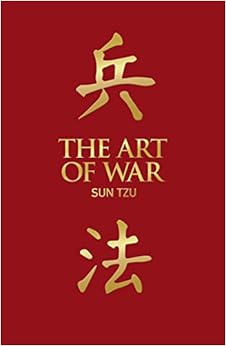
Image result for the art of war

“Pretend inferiority and encourage his arrogance.”

Sun Tzu, The Art of War (5th century BCE)

Even if you haven’t read The Art of War, you’re probably familiar with many of its now-famous axioms, most of which relate to military strategy and tactics, but can be just as easily applied to day-to-day stuff, business, sports, and pretty much everything else in life.

Here are a coupe of other doozies from Sun Tzu (544-496 BCE):

“Appear weak when you are strong, and strong when you are weak.”

“If you know the enemy and know yourself, you need not fear the result of a hundred battles. If you know yourself but not the enemy, for every victory gained you will also suffer a defeat. If you know neither the enemy nor yourself, you will succumb in every battle.”

“Treat your men as you would your own beloved sons. And they will follow you into the deepest valley.”

Although we have only had an annotated English translatin of The Art of War from its original Classical Chinese since 1910, when Lionel Giles seemed to accomplish the linguistically impossible, its effect on Western culture was immediate and profound.

Sadly, as the American Century – from its entrance onto the word stage as the NKOTB at the tail end of World War I in 1917 to the swearing-in of Donald Trump as President in 2017 – draws to a close, I can’t help but wonder if the current U.S. Commander-in-Chief didn’t perhaps get his Art of War on through the wrong medium, instead using Mr. Snipes as his inspiration to lodge a war with the world.

After watching the goings-on at the White House over the last five months or so, another military strategist I think about is Napoleon Bonaparte, a complex character who could come up with dynamite little quips in a short amount of time, kind of like this one: “Never interupt your enemy when he is making a mistake.”

Indeed, we won’t. After all, who needs any of that phony baloney bread or circus stuff when we’ve got Donnie T. shooting himself in the foot with a mouth-propelled rocket on a daily basis. I’ll tell you who really needs the bagutte and Cirque de Soleil action – the infamous secret agenct, Señor Covfefe of Mexico.

Leave a comment

Filed under Uncategorized

A Dictionary of Canadianisms

Image result for  Dictionary of Canadianisms on Historical Principles

Jesse Sheidlower (@jessesheidlower) over at The New Yorker had a fantastic piece appear in the magazine a couple of months ago called “A Delightful Dictionary for Canadian English.” No surprise, then, that this post is dedicated to all those woeful souls in other countries who, over the years, have asked me, “Do you speak American?” (and something I got to poke fun at in the story “Everybody’s Dictionary (& Other Semantic Debacles).”)

Uhhhhhhhhhhh…only when south of the 49th?

However, I must say that question about my ability to communicate in “American” was only topped when a Canadian – a freaking CANADIAN! in frigging Canada – once asked me after learning that I lived in Korea for a decade, “So, like, do you speak Asian?”

Oy vey, I thought, wishing I’d responded, “Yes. I am fluent in Asian, England, Molson Canadian, European and several South Africas.”

Leave a comment

Filed under Uncategorized

The Semantics and Behaviour behind Happiness: The 2nd Hardest Word to Define/Translate

Image result for happy/sad

Writing for The Atlantic, Emily Esfahani Smith (@EmEsfahaniSmith) penned an awesome piece titled “Meaning Is Healthier Than Happiness.” The byline to her article pretty much says it all:

“People who are happy but have little-to-no sense of meaning in their lives have the same gene expression patterns as people who are enduring chronic adversity.”

Um…pardon?

Ms. Smith, author of The Power of Meaning: Crafting a Life That Matters, looks at one specific psychology study that in very simple terms broke down our actions as either selfless “giving” behaviour, which is associated with meaning, or as selfish “taking” behaviour, which is tied to happiness. As the authors of the study wrote:

“Happiness without meaning characterizes a relatively shallow, self-absorbed or even selfish life, in which things go well, needs and desire are easily satisfied, and difficult or taxing entanglements are avoided. If anything, pure happiness is linked to not helping others in need.”

While I can see a lot of the logic behind the differentiation in the concepts of happiness and meaning/self-fulfillment, I was curious how language can, if at all, inform us of what our ancestors thought of the word “happy.” As always, diachronic linguistics (just a fancy way of saying the history behind language) can be as informative as the study of current medical and psychological data.

To begin, what we in English today refer to as “happy” or “happiness” comes from Middle English (1300-50) and essentially meant “lucky, favored by fortune, prosperous.” In fact, according to that book Donnie T. calls “a dirty old rag too stupid to capitalize my own name” – or what the rest of us dumbass plebes call a dictionary – the origin of “happy” right across Western Europe was strikingly similar:

From Greek to Irish, a great majority of the European words forhappy’ at first meantlucky.’ An exception is Welsh, where the word used first meantwise.'”

Bloody Welsh! Always usurping the rest of Europe with their flute-playing high-falutin beliefs. Must be their enviable weather and mouth-watering laverbread.

But I digress. As usual. Same-same but different this time.

Let’s go back even further in history, shall we? It would seem the Romans had the same idea behind their concept of “happy,” as their words – laetus (masculine) laeta (feminine) and laetum (neuter) – meant (1) favourable/propitious; (2) cheerful/joyful/glad; and (3) prosperous/successful.

One step back in time and we arrive at the ancient Greeks, who finally had a unique idea all their own (how did nobody from Homer to Aristotle ever get anything right!); “happiness” for them was “experiencing the fullness of something.” Now contrast that with its opposite, which Aristotle defined as “to be in want, to be in need, to be destitute.”

Okay, maybe the Greeks got something right besides a salad.

In any event, I wanted to look at a completely different language and one with no ties to English, Germanic, Latin or Greek to see what the etymology behind “happiness” was somewhere else in the world. Enter, stage left, Messrs Chinese and Korean.

In Korean, the noun “happiness” is 행복 (haengbok), while in adjective form (which is technically a verb in KO-ree-an…yeah, wrap your head around them apples!) “happy” is 행복하다 (haengbokhada). Both the haeng and bok characters are derived from Classical Chinese, haeng being translated as “fortunate” and bok meaning “happy.”

(Strangely, the opposite of haengbok from Characters is 명복, myeongbok, whose two geulja refer to “dark” (or Hades by extension) and “fortune” (the same bok in “happy/happiness”), which taken together are translated as “happiness in the after life.”)

This led me to don my Ignatius J. Reilly sleuthing toque and go behind the scenes to figure out what the Chinese characters xing (haeng) and fu (bok) originally referred to from their radicals.

As it turns out, xing (haeng) comes from two radicals, land & bitter (filed under the radical for “shield” in a Chinese dictionary), meaning “fortunate/lucky,” while fu (bok) stems from four radicals, manifest, mouth, one & field (filed under the radical for “manifest” in a Chinese dictionary), meaning “happy/prosperity/luck.”

So what do we take away from this hot mess of language and science? Basically, the Greeks had it right all along when it comes to the notion of “happiness,” a fact now backed up by empirical data. (Jeez, even the Welsh seemed to have a better handle on this notion than the rest of the world, at least linguistically).

Be that as it may, I for one – when speaking in English – do still consider happiness as being both blessed and fortunate, a state of mind that propels us to be kind to others and to practice selflessness over selfishness, peace over turmoil, love over hate.

The byline to my post today is “The 2nd Hardest Word to Define/Translate,” which begs the question: What is the hardest word to define in and translate from English?

Ooh ooh ooh! A cliffhanger ending! The reader has a mild inclination to scoff and then kill this window, but an even greater desire to slap me silly unless I follow through with my pledge and answer this confounding conundrum posthaste. You might have to wait a day or two for that, though…

Leave a comment

Filed under Uncategorized

Keys to Getting a Million Views for Your Site

Image result for looking at computer and freaking out

Bloggers/Writers/Entrepreneurs, take note. If you want to up your A game and reach seven digits with your total number of site views, take a few minutes and read this excellent piece by Jon Westenberg (@Jonwestenberg) titled “The Tools I Used To Reach 5,000,000 Views on Medium.”

I’ll let Mr. Westenberg do the heavy lifting on this one, but basically he highlights some really simple-to-use yet highly effective tools. This can be accomplished by making use of websites like Grammarly, Google Trends, KeyHole, Speedlancer, Medium.com, and Google News, while vigorously seeking out your competition and finding out how you measure up against them in terms of content, popularity, on-target marketing, etc.

It obviously goes without saying that if your site looks at least half-normal – not like one of these “Top 10 worst websites you’ll wish you hadn’t seen” – and you know how to string together sentences that prove you graduated from grammar school (pun intended), then the seven-digit site views goal is not a pipe dream; it’s definitely within reach as long as you’re willing to do a lot of hard work and log a ton of miles.

Should you get down on yourself and lose confidence somewhere down this path, just remember what my favourite hagwon in Korea used to remind its students: “You can do!”

Leave a comment

Filed under Uncategorized

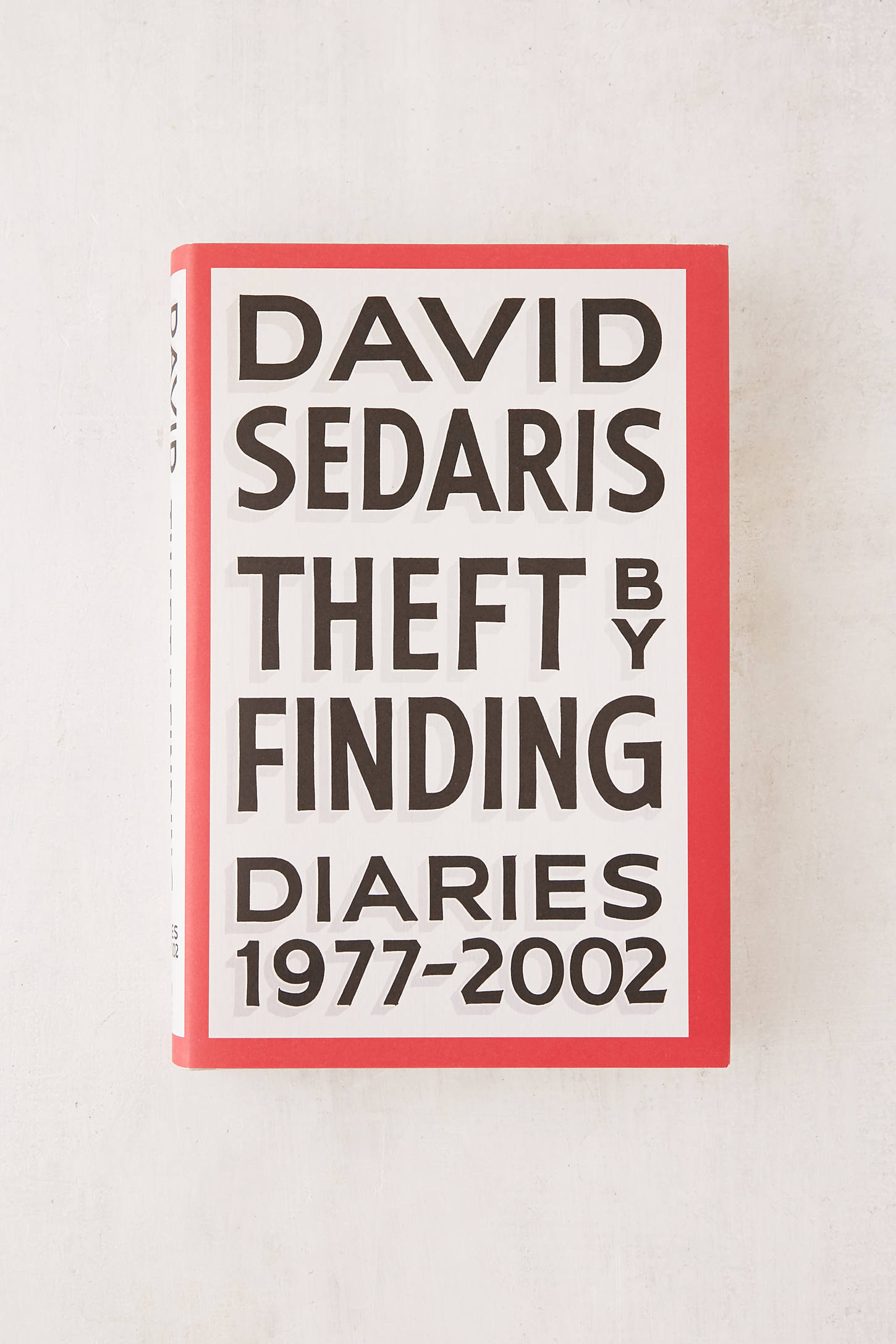
Theft by Finding: Diaries (1977-2002) by David Sedaris

Image result for theft by finding

Yep, it’s official: David Sedaris has a new book out called Theft by Finding: Diaries (1977-2002). That, of course, is good news; when it comes to random narratives about everyday life, you’d be hard-pressed to find anyone today writing in the English language who not only writes with more panache, but can also narrate these stories out loud and in person better than anyone. Don’t believe me? Check out his reading of this classic story, “Six to Eight Black Men,” one of many gut-bustingly (you’re welcome for the new addition, OED)hilarious stories from his book Dress Your Family in Corduroy and Denim.

Patton Oswalt (@pattonoswalt) wrote a great review of the book for The New York Times titled “David Sedaris’s Diaries Track a Path From Struggle to Success.” However, if you want to listen to the man himself wax poetic about Theft by Finding, you can listen to David Sedaris here.

Leave a comment

Filed under Uncategorized